
Why an Omnichannel Content Strategy is Crucial
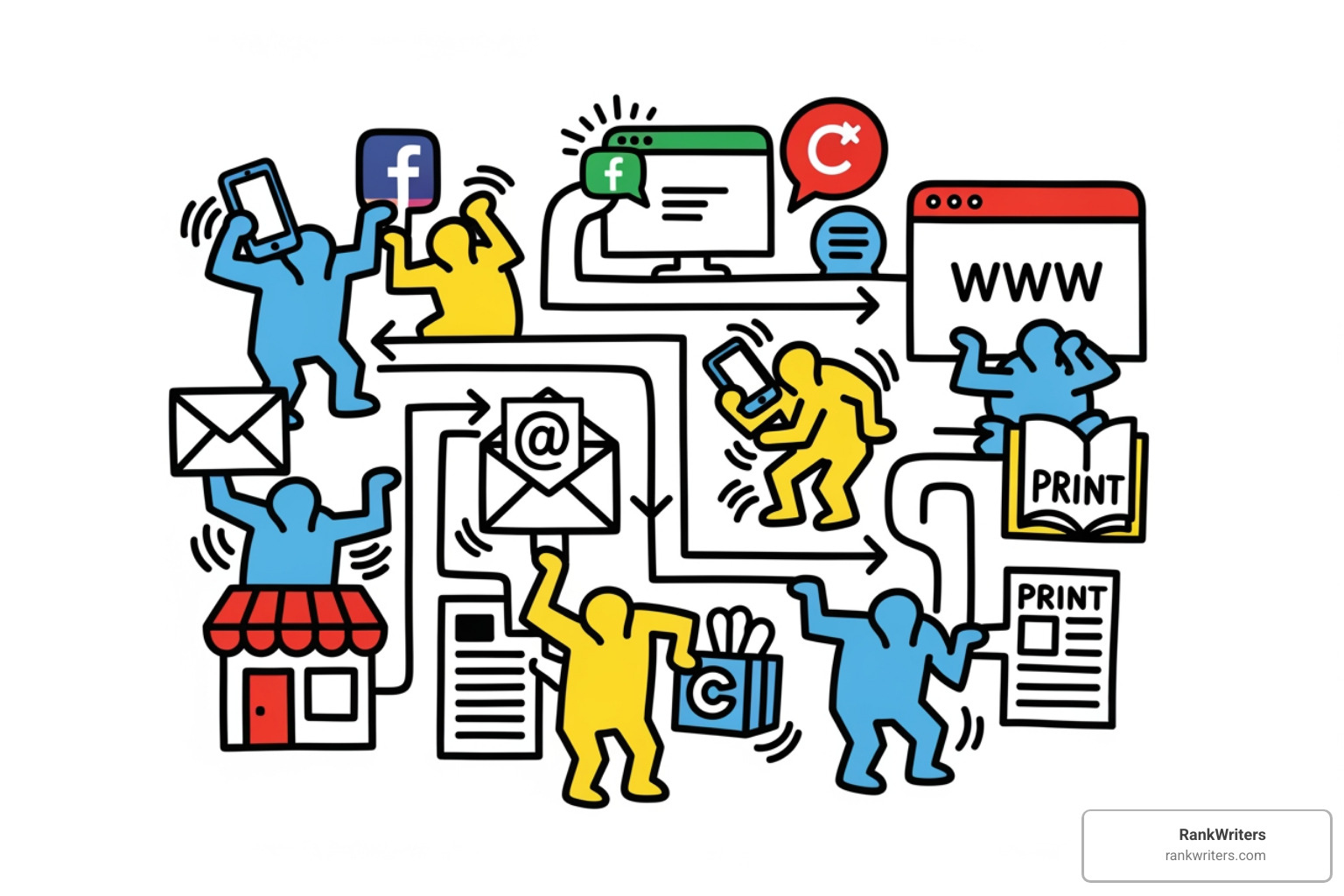
An omnichannel content strategy creates a consistent, unified customer experience across all brand touchpoints—your website, mobile app, social media, email, and physical stores. It’s about more than just being on multiple channels; it’s about making them work together seamlessly.
Key principles include:
- Integrated Experience: Unlike multichannel marketing where channels operate in silos, an omnichannel approach integrates all touchpoints for a seamless journey.
- Customer-Centric Focus: Every channel works together to serve the customer, not just broadcast messages.
- Data-Driven Personalization: Unified customer data is used to deliver relevant content at the right time on the right channel.
Modern customers don’t think in channels. They might start researching on their phone, continue on a laptop, and buy in-store. They expect your brand to remember them at every step.
However, most businesses struggle with content silos. Blog teams don’t coordinate with social media, and email campaigns ignore website activity. This creates a disjointed experience that sends customers to competitors.
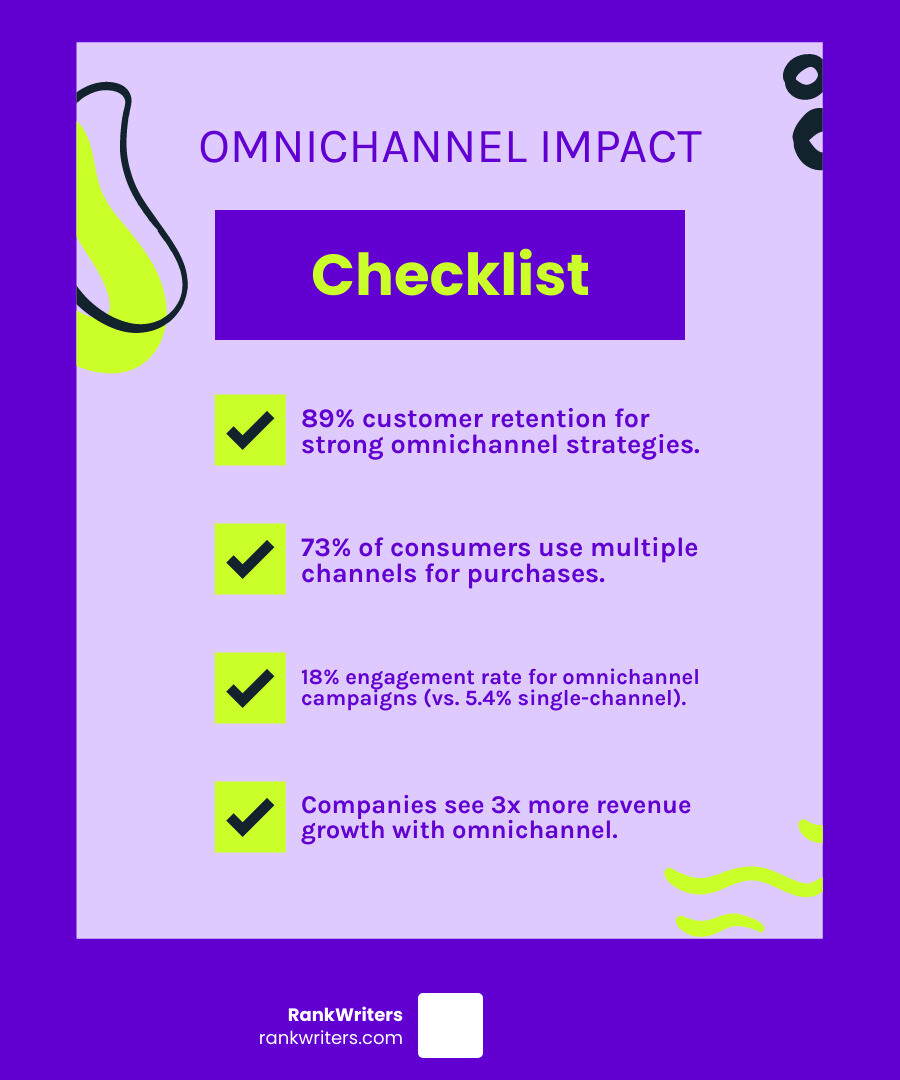
This matters more than ever. A Harvard Business Review study found 73% of consumers use multiple channels for a single purchase, and that number continues to grow. The data proves it works: omnichannel campaigns earn an 18% engagement rate compared to 5.4% for single-channel efforts, and companies with strong omnichannel strategies retain 89% of their customers, versus 33% for those without.
But creating connected experiences is challenging. It requires structured content, unified data, collaborative teams, and the right technology. This guide will show you how to build an omnichannel content strategy that drives real results.
I’m Brandie Young, a Fractional CMO and GTM strategist. I’ve helped brands in fintech, legal, and healthcare implement winning omnichannel strategies that turn scattered marketing into a cohesive revenue engine.
Deconstructing Omnichannel: More Than Just Multiple Channels
“Omnichannel” and “multichannel” are often confused, but they differ greatly in execution and impact. Understanding this distinction is key to mastering your omni-channel content strategy.
A multichannel approach means being present on multiple platforms (website, social media, email), but each channel operates independently. It’s like a band playing different songs in different rooms—there’s noise, but no unified concert.
An omni-channel content strategy orchestrates all channels to work together, creating a single, cohesive, and personalized customer experience. The focus shifts from the channel to the customer’s journey.
Here’s a quick breakdown of the key differences:
| Feature | Multichannel Marketing | Omnichannel Marketing |
|---|---|---|
| Customer Focus | Channel-centric (focused on individual channel performance) | Customer-centric (focused on the customer’s journey) |
| Channel Integration | Channels operate in silos, often disconnected | All channels are integrated and communicate with each other |
| Messaging | Inconsistent or duplicated across channels | Consistent, unified, and personalized across all touchpoints |
| Goal | Maximize presence on each channel | Create a seamless, continuous customer experience |
| Data Synchronization | Limited or non-existent | Unified customer data across all channels |
For example, in a multichannel setup, a customer sees a generic ad for a product they already added to their cart. In an omnichannel world, that ad would be personalized, perhaps reminding them of their cart or showing related items. The experience flows effortlessly between touchpoints.
Today’s multi-touchpoint reality demands an integrated strategy. To dig deeper into how different marketing approaches stack up, consider exploring our insights on Content Marketing vs Paid Search.
Why an Omnichannel Approach is Non-Negotiable
An omni-channel content strategy is critical for survival and growth. Here’s why:
- Superior Customer Retention: Companies with strong omnichannel strategies retain 89% of their customers, compared to 33% for those without. A frictionless experience builds loyalty.
- Higher Engagement Rates: Omnichannel campaigns achieve an 18% engagement rate, far surpassing the 5.4% from single-channel efforts. Relevant content captures attention.
- Increased Revenue: Omnichannel companies see revenue growth three times more often than their counterparts. Personalization drives higher conversion rates, AOV, and traffic.
- Cohesive Brand Voice: An omnichannel approach ensures a unified brand image and consistent messaging across all platforms, building trust and recognition.
- Valuable Customer Data: Tracking interactions across channels provides a 360-degree customer view, enabling smarter, data-driven decisions.
- Reduced Customer Fatigue: By understanding the customer journey, you can tailor touchpoints to feel personal and helpful rather than intrusive.
The modern customer expects you to meet them where they are. Ignoring this means falling behind. For a deeper dive into the strategic importance of content, explore Why Content Marketing is a Critical Effort.
The Blueprint for a Successful Omnichannel Content Strategy
An effective omni-channel content strategy relies on three core components: deep audience understanding, a unified brand, and the right technology.
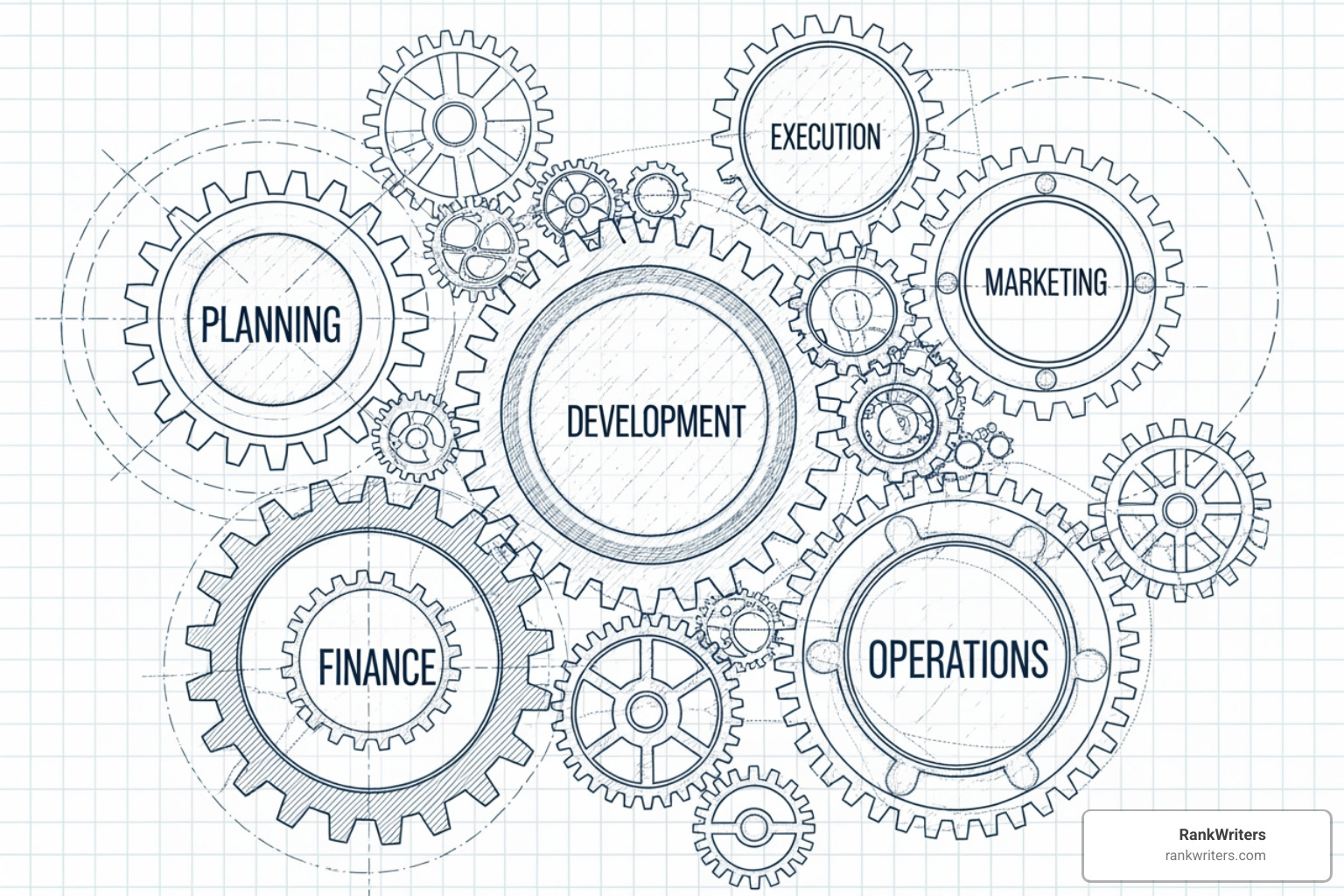
Success hinges on a unified customer profile, a consistent brand voice, and integrated tools for data-driven decisions. This approach transforms scattered efforts into a revenue-generating engine. For more on strategic content, see our insights on SEO Content Strategy.
Component 1: Deep Audience and Journey Understanding
You can’t create resonant content without knowing your audience. This requires a deep dive into their journey.
- Customer Journey Mapping: Map every touchpoint a customer has with your brand, from awareness to support. This helps identify needs, goals, and pain points at each stage.
- Buyer Personas: Develop detailed personas that capture motivations, challenges, and behaviors to anticipate customer needs.
- Identifying Pain Points: Pinpoint where customers get stuck or frustrated between channels. Addressing these issues with content builds trust.
- Channel Preferences Analysis: Use data to understand which channels your customers prefer for different interactions, such as research, findy, or support.
By researching audience behavior, you can tailor content to their needs. To learn more about aligning content with user intent, read our guide on 5 Steps to Match Content to Potential Client Search Intent.
Component 2: A Unified Brand and Messaging Framework
Consistency is crucial. A brand that speaks with different voices on different channels erodes trust. This component ensures one clear, cohesive voice.
- Brand Voice and Tone Guidelines: Define your brand’s personality, vocabulary, and communication style to ensure all content creators adhere to the same standards.
- Core Message Development: Identify the essential messages you want your audience to remember and weave them into all content.
- Style Guides: Establish visual and editorial style guides covering fonts, colors, grammar, and product terminology for a consistent brand presentation.
- Visual Identity Consistency: Ensure your visual assets are instantly recognizable across your website, social media, and in-store displays.
A unified approach is key to creating cohesive content across channels. Find more about structuring your content foundation with Build Topic Authority: Hub & Core Offers.
Component 3: The Right Content and Analytics Tools
A great strategy is useless without the right tools. This component is about equipping your team with the technology to execute your omni-channel content strategy.
- Content Management Systems (CMS) & Headless CMS: A headless CMS separates content from its presentation, allowing you to create content once and publish it anywhere (website, app, smart devices). This agility is crucial for omnichannel delivery.
- Customer Data Platforms (CDPs): A CDP unifies customer data from all sources, creating rich profiles that power personalization and provide a 360-degree customer view.
- Marketing Automation Tools: These tools orchestrate your strategy by automating triggered messages, personalizing customer journeys, and coordinating campaigns across channels.
- Analytics Platforms: Robust analytics (like Google Analytics 4) are needed to track interactions, monitor conversions, and gain insights into content performance, allowing for continuous optimization.
An API-first architecture is key for modern omnichannel platforms. To understand how your website’s technical foundation supports these efforts, explore Website Architecture and SEO.
How to Build and Optimize Your Omnichannel Content Machine
With the blueprint in place, it’s time to build the machine. This involves structuring content smartly, using data for personalization, and automating campaigns.
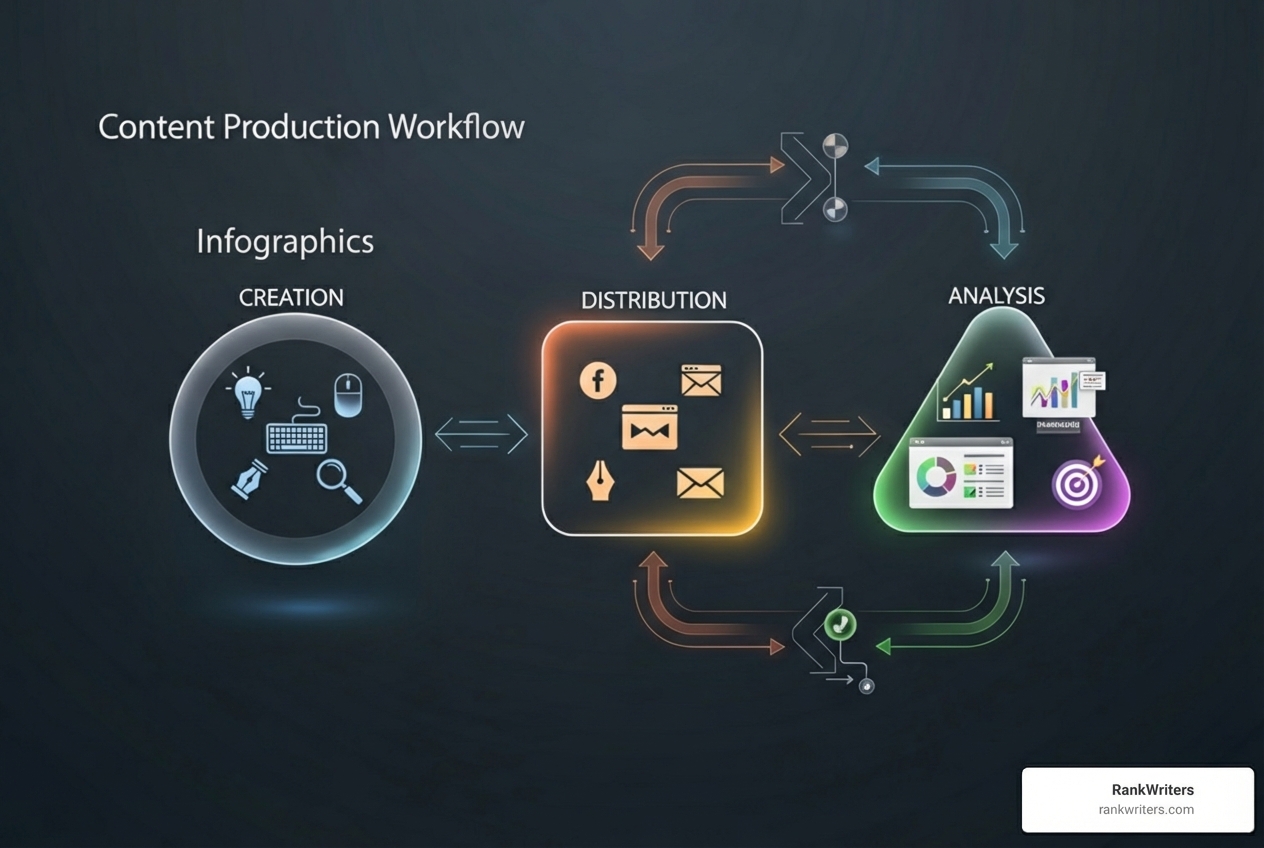
This workflow creates a continuous optimization loop, ensuring your omni-channel content strategy is always improving. For insights on maintaining a steady flow of content, refer to Create Consistent Content Production Machine.
Structuring Content for Maximum Reusability and Adaptability
Structure your content like Lego bricks: modular, adaptable, and reusable.
- Modular Content: Break down large content pieces into smaller, self-contained modules (e.g., headlines, images, CTAs) that can be mixed and matched.
- Content Atomization: Repurpose a large piece of content (like a webinar) into multiple smaller formats (video clips, blog posts, social snippets) to maximize reach.
- Structured Data: Organize content with clear fields and taxonomies (e.g., product name, price, features) to allow for dynamic use across different formats.
- Reusable Components: Create a central library of components like CTAs, testimonials, or mission statements that can be deployed across any channel.
- Content Modeling: Define your content types and their relationships to ensure every piece has a clear purpose and can be easily adapted.
- Contextual Tagging: Tag content by context (persona, funnel stage, tone) to enable personalization engines to serve the right content at the right time.
This “create once, publish everywhere” (COPE) approach is fundamental to an efficient omni-channel content strategy. Learn more about foundational content structures with our guide on Pillar Content and explore best practices with Tips for developing a successful omnichannel strategy.
Leveraging Data and Analytics for Smarter Personalization
Data is the fuel for personalization. It allows you to deliver experiences that feel unique to each customer.
- Customer Behavior Tracking: Track every interaction across all channels—clicks, app usage, email opens, purchases—to understand customer preferences.
- Unified Customer Profiles: Use a CDP to aggregate data into a single customer profile, eliminating silos and providing a holistic view.
- A/B Testing Across Channels: Continuously test content variations, CTAs, and messaging across channels to see what drives the best results.
- Predictive Analytics: Analyze historical data to predict future behavior, such as likely purchases or preferred communication channels.
- Personalization Strategies: Use data to implement dynamic website content, personalized email recommendations, and targeted ads that reflect recent interactions.
Leveraging data moves you beyond generic messaging to create personal touchpoints that drive engagement and conversions. To measure the return on your data investments, check out How to Measure ROI with Google Analytics 4. To accurately track customer journeys, consider implementing What are UTM Codes?.
Enhancing Campaigns with Marketing Automation
Automation allows you to deliver personalized, timely content at scale.
- Triggered Messaging: Set up automated messages based on customer actions, such as abandoned cart emails or welcome series.
- Personalized Customer Journeys: Design complex journeys with branching logic that adapts to customer behavior.
- Lead Nurturing Sequences: Deliver a steady stream of valuable content to move leads through longer sales cycles.
- Cross-Channel Campaign Orchestration: Use automation tools to schedule and coordinate content across email, SMS, social media, and push notifications for a cohesive experience.
- Optimized Delivery: Use AI-powered features to optimize send times and select the best channel for communication, ensuring your messages are seen.
Automation is pivotal for orchestrating omnichannel campaigns and making every interaction count. For practical steps, explore How to Set Up Behavior-Triggered Email Sequences.
Navigating Challenges and Measuring True Impact
Implementing an omni-channel content strategy has its challenges. By anticipating common problems and measuring success correctly, you can steer them with confidence.
Common Implementation Problems (and How to Clear Them)
Many businesses face similar problems. Here’s how to overcome them:
- Organizational Silos: Teams working in isolation create disjointed experiences.
- Solution: Foster cross-functional collaboration with shared goals, regular meetings, and a centralized content plan.
- Integrating Existing Technology: Legacy systems can hinder data and content unification.
- Solution: Invest in modern, API-first platforms (like a headless CMS or CDP) designed for integration. Start small and expand gradually.
- Ensuring Data Consistency: Inaccurate data leads to poor personalization.
- Solution: Use a Customer Data Platform (CDP) to aggregate and clean customer data, and establish clear data governance policies.
- Securing Budget and Buy-in: Proving ROI upfront can be difficult.
- Solution: Start with a pilot project on a high-impact journey. Use quick wins to build momentum and secure further investment.
- Inconsistent Messaging: Different teams may create conflicting content.
- Solution: Use comprehensive brand and style guides, a shared content calendar, and a central content hub. Conduct regular content audits.
- Lack of Cross-Channel Visibility: Not knowing how customers move between touchpoints makes optimization impossible.
- Solution: Use advanced analytics and consistent UTM tagging to track user journeys across devices and channels.
To ensure a consistent brand voice, define your brand’s personality and train all teams to adhere to it. Regular check-ins are essential.
Key Metrics for Measuring Your Omnichannel Content Strategy
Measure success by connecting your efforts to business outcomes, not just vanity metrics.
- Customer Lifetime Value (CLV): A rising CLV indicates that seamless experiences are encouraging customers to stay longer and spend more.
- Conversion Rate by Journey: Track conversion rates for specific journeys that span multiple touchpoints, not just by individual channels.
- Engagement Rate Across Channels: Monitor how customers interact with content on each platform (clicks, views, shares) to spot trends.
- Customer Satisfaction (CSAT) & Net Promoter Score (NPS): Use these scores to gauge customer sentiment and identify areas for improvement.
- Attribution Analysis (e.g., Marketing Efficiency Ratio – MER): Understand which channels contribute to conversions beyond the “last click” to get a true picture of marketing impact.
- Reduced Customer Service Costs: Effective self-service content across channels should lower the burden on your support team.
- Average Order Value (AOV): Personalized recommendations and seamless cross-sells across channels can lead to higher AOV.
Focus on long-term trends and automate reporting to free up time for analysis. For benchmarks, refer to How to Benchmark Organic Traffic.
Frequently Asked Questions about Omnichannel Content Strategy
How do I start implementing an omnichannel strategy with a small team?
Starting with a small team is achievable with a focused approach:
- Start with Priority Journeys: Identify and map the 1-2 most critical customer journeys and focus your initial efforts there.
- Focus on 2-3 Key Channels: Master the channels where your audience is most active before expanding.
- Leverage Automation: Use tools for triggered emails, social scheduling, and lead nurturing to save time for strategy and content creation.
- Repurpose Content: Create one core piece of content and atomize it into smaller formats for other channels to maximize its reach.
- Establish Clear Guidelines: Document your brand voice and style guides to ensure consistency without constant supervision.
For more on optimizing your efforts, check out DIY SEO to Enhance Search Rankings.
What’s the difference between omnichannel and multichannel content?
The core difference is integration and customer focus.
- Multichannel content is created for individual, siloed channels. It’s about broadcasting messages on multiple platforms.
- Omnichannel content is designed for an integrated, seamless customer experience. The content is structured and adaptable, creating a unified narrative that follows the customer across all touchpoints.
How does AI impact an omnichannel content strategy?
AI makes your omni-channel content strategy more efficient, personalized, and effective.
- Improves Personalization at Scale: AI analyzes customer data to deliver highly personalized content recommendations across all channels.
- Optimizes Content Delivery: AI can predict the best time and channel to send a message, maximizing engagement.
- Provides Deeper Insights: AI-powered analytics identify patterns in customer behavior that humans might miss.
- Assists in Content Creation: Generative AI can help draft content and adapt it for different channels, speeding up production.
- Improves SEO for AI Search (AEO): AI helps optimize content for new search paradigms, ensuring your content is findable.
AI acts as a co-pilot for managing omnichannel complexity. To ensure your content is ready for the future of search, explore Format Content for AI Search.
Conclusion: Future-Proofing Your Content for a Connected World
Mastering an omni-channel content strategy is a continuous journey with substantial rewards. It’s about being everywhere cohesively, consistently, and with a customer-centric focus. By understanding your audience, unifying your brand, and leveraging the right tools, you can create experiences that delight customers and drive measurable growth.
The modern customer expects a seamless experience, whether they’re browsing on a phone in Westmoreland County, Pennsylvania, or buying online. This expectation will only grow, fueled by AI and automation.
At RankWriters, we know a future-proof strategy combines traditional SEO with AI Search (AEO) and Geo-Optimization (GEO). We craft content that ranks high and engages your audience across all touchpoints. Our systematic approach turns your omni-channel content strategy into an engine for consistent inbound leads and revenue.
The ability to deliver personalized experiences at scale will define future market leaders. Your omnichannel strategy is the vehicle to get you there. For more insights, read Why Content Marketing is a Critical Effort.