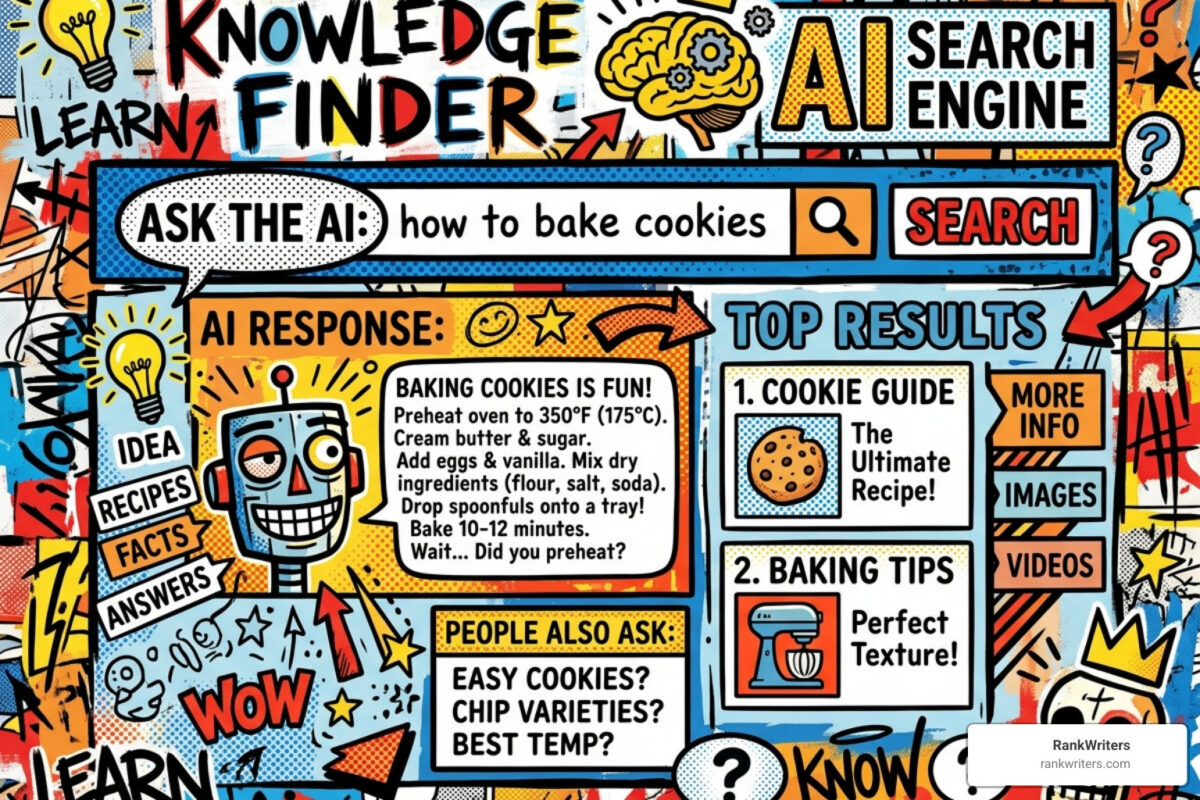


AI tools like ChatGPT and Perplexity are reshaping how people find businesses and services. If you don’t see your brand mentioned in AI tools, you’re missing potential customers. Here’s the key takeaway: AI tools prioritize content that’s credible, well-structured, and authoritative. To get your brand noticed, you’ll need to focus on these strategies:
- Use structured data and schema markup: Label your website content (e.g., services, hours, FAQs) to help AI tools understand and rank it.
- Publish high-quality, detailed content: Include guides, FAQs, and case studies that answer user questions thoroughly.
- Build authoritative backlinks: Earn mentions from trusted industry sources and local organizations.
- Stay updated: Regularly refresh your content to signal relevance to AI tools.
- Localize your content: Use U.S. spelling, measurements, and culturally relevant examples for location-specific searches.
How to Rank in ChatGPT Responses and Track Every Brand Mention | AI Search Optimization Tutorial
How AI Tools Pull Brand Information
AI tools don’t come preloaded with knowledge about your brand. Instead, they rely on data collection and ranking systems to decide what information gets included in their responses. To position your brand effectively, it’s important to understand how these systems work. This insight is key to ensuring your brand gets noticed and recommended by AI platforms.
How AI Tools Crawl and Rank Data
AI platforms use automated crawlers, much like traditional search engines, to scan websites for fresh content, structured data, and signals of trustworthiness and relevance. These crawlers are constantly at work, gathering information to feed into AI systems.
Unlike older SEO strategies that focused on keyword matching, AI tools prioritize expertise, thorough answers, and authority. Structured data, like schema markup (e.g., Organization, LocalBusiness, FAQ), helps AI categorize your content quickly. Using clear headings, bullet points, and a logical hierarchy makes it easier for AI algorithms to extract meaningful details and present them in a user-friendly way.
Keeping your website updated is also essential. Regularly updated content signals that your site is active and relevant, giving you an edge over static websites. These strategies directly affect your brand’s chances of being included in AI-generated responses.
How Authority and Backlinks Affect AI Mentions
Backlinks still play a major role in how AI tools select content, but the bar for quality is higher than traditional SEO. AI platforms heavily favor mentions from reputable sources, especially those recognized as leaders in their industries or trusted publications.
The more credible citations your brand accumulates, the better. When multiple authoritative sources reference your brand, it creates a web of trust that AI tools can detect and value.
Domain authority and topical expertise also matter a lot. For example, a law firm cited by well-known legal publications or bar associations will have a stronger AI presence than one with generic links from unrelated sites. AI tools evaluate the relevance of linking domains to ensure they align with your industry.
Memberships and certifications from professional organizations also boost authority. Listings in directories maintained by groups like the American Bar Association, medical boards, or financial certification bodies send strong credibility signals to AI systems.
For location-based searches, local authority signals are equally important. Mentions from local chambers of commerce, Better Business Bureau listings, or local news outlets help establish geographic relevance, making it more likely that AI platforms will recommend your business for location-specific queries.
Key Strategies to Boost Brand Visibility in AI Tools
Now that you’ve got a handle on how AI tools gather and rank information, it’s time to put that knowledge to work. The following strategies can help your brand shine in AI-generated responses and recommendations.
Optimize Your Content with Structured Data and Schema Markup
Schema markup – like Organization, LocalBusiness, FAQ, Product, Article, Service, and Review – is a powerful way to label your content for AI tools. Think of it as a language that helps these systems understand your website’s purpose. For example, schema can highlight your business hours, services, contact details, and areas of expertise.
Accuracy is key. Make sure your markup matches the actual information on your site, and update it regularly as your business evolves. This not only helps AI tools categorize your content but also builds trust and credibility.
Focus on Content Types That Drive AI Discoverability
Diversify your content to include formats that AI tools tend to prioritize. For instance:
- Step-by-step guides and FAQs that provide clear answers to common questions.
- Case studies that showcase your expertise with real-world results and measurable outcomes.
- How-to guides tailored to industry-specific concerns.
Content that’s well-organized, easy to read, and packed with value increases your chances of being picked up by AI systems. The clearer and more relevant your content, the stronger your digital presence becomes.
Build and Maintain Authoritative Backlinks
When it comes to backlinks, quality trumps quantity. A single mention from a trusted source can do more for your AI visibility than dozens of low-quality links.
To earn these mentions, focus on contributing to reputable sites through guest posts, expert insights, or features. Collaborating with industry leaders and engaging in professional communities – whether on social media or at events – can naturally lead to these valuable connections.
The Connection Between Consistent, High-Quality Content and AI SEO
As mentioned earlier, reliable data and well-structured content are essential. But what really sets your brand apart in AI-driven rankings is consistency and authority. When your content consistently delivers value and expertise, it strengthens your brand’s credibility in the eyes of AI tools. These systems evaluate your entire content ecosystem, and frequent, high-quality contributions signal a deep understanding of your niche. This approach increases the likelihood of your content being prioritized in AI-generated responses. Now, let’s dig into how content freshness, topical authority, and quality signals can further enhance your visibility.
How Content Freshness and Topical Authority Affect AI Visibility
Keeping your content fresh is critical for staying relevant in AI rankings. Regular updates show AI systems that your brand stays up-to-date and continues to provide timely information. This isn’t just about publishing new content – it’s also about revisiting and refining existing resources.
Topical authority, on the other hand, positions your brand as a trusted expert in specific areas. For instance, if your business frequently publishes in-depth guides on cybersecurity, AI tools start recognizing your brand as an authoritative source in that field. Covering a subject comprehensively – through blog posts, white papers, case studies, and more – helps solidify this reputation. When users ask AI tools for information on related topics, your brand is more likely to be referenced.
Consistent contributions that maintain high standards of quality reinforce this authority over time.
Quality Signals That AI Tools Look For
Beyond freshness and authority, AI systems rely on specific quality indicators to rank and reference content. Accuracy is at the top of the list. Information that can be cross-verified with reliable sources holds more weight, so thorough fact-checking and citing credible references are non-negotiable.
Depth also matters. Shallow content won’t cut it with AI algorithms. Instead, your resources should delve deeply into topics, anticipate follow-up questions, and offer actionable insights that readers can apply.
User engagement is another major factor. Content that sparks comments, gets shared, or brings readers back for more sends a clear message to AI systems: it’s valuable. While you can’t directly control engagement metrics, creating content that addresses real problems and offers practical solutions naturally encourages interaction.
Finally, structure plays a big role. Well-organized articles with clear headings, logical flow, and easy-to-scan formatting help AI tools understand and process your content more efficiently. This makes it easier for them to extract key information and associate it with your brand.
sbb-itb-16c0a3c
RankWriters Case Studies: Real Brand Visibility Results
RankWriters has a track record of delivering measurable success by improving AI tool visibility for its clients. By combining targeted content strategies with precise technical implementation, they’ve helped businesses achieve noticeable improvements. Let’s dive into two real-world examples that highlight how optimized content and technical expertise can transform AI visibility.
Case Study 1: Law Firm Boosts Mentions in AI Tools
A personal injury law firm based in Denver turned to RankWriters in January 2024 with a pressing issue. Despite their established reputation, the firm was practically invisible when potential clients used AI tools like ChatGPT and Perplexity to search for personal injury attorneys in the area.
RankWriters tackled this challenge by creating a focused content pillar around personal injury topics. They produced detailed guides on key areas like car accidents, slip-and-fall cases, and workers’ compensation. These pieces were enriched with proper schema markup and tailored to local search patterns.
To further enhance visibility, the firm invested in high-quality backlinks through guest articles in legal publications and collaborations with local business organizations. All content adhered to U.S. legal writing standards and incorporated Colorado-specific legal information to ensure relevance.
| Metric | Before (Jan 2024) | After (Aug 2024) | Improvement |
|---|---|---|---|
| AI Tool Mentions | 2 per month | 47 per month | 2,250% increase |
| Branded Search Volume | 890 monthly | 3,420 monthly | 284% increase |
| Qualified Leads | 12 per month | 38 per month | 217% increase |
In just seven months the law firm saw a jump in AI mentions, a 284% rise in branded search volume, and a 217% boost in qualified leads.
Case Study 2: Plastic Surgery Practice Gains AI Recognition
A Miami-based plastic surgery practice was well-known locally, but it struggled to appear in AI tool responses for procedures like rhinoplasty or breast augmentation in South Florida. Recognizing this gap, RankWriters developed a localized content strategy.
The approach focused on showcasing the Doctor’s expertise while incorporating Miami-specific details. They created comprehensive guides for each procedure, available in multiple formats such as written articles, infographics, and video transcripts. Each piece was optimized with structured data, while detailed insights into the Doctor’s techniques and patient care philosophy bolstered her credibility.
Within six months, the practice saw a dramatic increase in AI recognition. Queries like “best plastic surgeons in Miami” or “rhinoplasty specialists near me” began consistently including the Doctor’s practice. As a result, consultation requests tied directly to AI referrals surged by 340%.
Key Takeaways from RankWriters’ Approach
These case studies highlight the effectiveness of combining strategic content creation with technical precision. Here are the main lessons:
- Regularly update content: High-quality, current content aligned with industry trends is essential.
- Localize your strategy: Use detailed, location-specific information and terminology to enhance geographic relevance.
- Build topical authority: Create comprehensive resources that thoroughly address your areas of expertise.
- Optimize for AI tools: Use schema markup, structured data, and proper formatting to make information easily accessible to AI systems.
These results demonstrate how a thoughtful, systematic approach to content and technical optimization can significantly boost AI visibility. RankWriters’ ability to blend strategic planning with technical expertise has proven to directly drive business growth through increased AI mentions and customer engagement.
Localizing Content for US Audiences to Maximize AI Recognition
Tailoring your content to align with US standards does more than make it relatable – it ensures your brand stands out to AI tools. These tools rely on structured data and authority signals, and by localizing your content, you increase its chances of being recognized in AI-generated responses. Matching American conventions is key to reinforcing your relevance.
Use US English Spelling, Grammar, and Formatting
AI tools are trained on vast datasets that reflect regional language patterns. Writing in US English helps signal relevance to American users, improving your chances of appearing in AI responses for US-based searches.
Stick to US spelling (e.g., color, analyze, center), and follow American punctuation rules – like placing commas and periods inside quotation marks. Use the Oxford comma for clarity, and apply title case for headings. American grammar tends to favor concise and direct phrasing, so structure your sentences accordingly.
Use US-Specific Formats and Measurements
Formatting matters. AI tools prioritize content that aligns with US conventions, so it’s essential to use American standards for dates, currency, and measurements.
- Write dates in MM/DD/YYYY format.
- Display prices with the dollar sign (e.g., $1,500.00).
- Use imperial units like miles, Fahrenheit, and pounds.
- Format phone numbers as (XXX) XXX-XXXX.
- Include ZIP codes instead of postal codes for addresses.
These details might seem minor, but they play a big role in helping AI tools recognize your content as geographically relevant.
Include Culturally Relevant Examples
AI tools favor content that demonstrates an understanding of local culture and context. Incorporating US-specific examples and references strengthens your connection to American audiences.
For example, mention national holidays like Memorial Day, the Fourth of July, or Thanksgiving. Highlight US regulations such as HIPAA or SOX, and reference well-known American brands. Even adding cultural markers like the Super Bowl for marketing timelines, tax season around April 15th, or back-to-school shopping in late summer can make your content more relatable and relevant.
Regional differences within the US matter too. Discuss how strategies might vary between the Northeast and Southeast or how the Midwest approaches things differently from the West Coast. This geographic awareness signals to AI tools that your content is tailored for nuanced, local insights.
Finally, don’t forget time zones. Always specify EST, PST, or other US time zones when mentioning events or deadlines. This attention to detail helps AI tools connect your content to location-specific searches, boosting its visibility for American audiences.
Conclusion: Key Takeaways for Boosting Brand Mentions in AI Tools
To get your brand noticed by AI tools, focus on these essential strategies:
- Create high-quality content: Content that is well-researched, thoughtfully structured, and packed with valuable information signals expertise and authority to AI algorithms. This increases the likelihood of your brand being recognized and mentioned.
- Prioritize technical optimization: Use schema markup, maintain a clear site structure, and build strong backlinks. These elements help your website align with the criteria that AI crawlers use to evaluate content. The better your alignment, the more likely AI tools will include your site in their responses.
- Localize your content: Tailor your content to the U.S. audience by using American spelling, measurement units, and cultural references. This makes your content more relevant to users within this geographic region, improving your chances of being featured.
FAQs
How can I make sure my brand is recognized as a trusted source by AI tools like ChatGPT and Perplexity?
To make sure AI tools like ChatGPT and Perplexity recognize your brand as a reliable source, focus on producing top-notch, authoritative content that matches what users are actively looking for. These tools often rely on information from websites that rank highly on Google, so optimizing your content for search engines is a must. Use relevant keywords, a clear and logical structure, and provide meaningful insights that add value to your audience.
Consistency matters – publish content regularly, and ensure it’s accurate, current, and engaging. Building domain authority is also crucial. You can achieve this by earning backlinks from reputable sites and maintaining a strong online presence. AI tools tend to favor well-organized, trustworthy sources when pulling information for their responses, so make reliability your priority.
How can I increase my brand’s visibility in AI tools like ChatGPT and Perplexity?
To make your brand more visible in AI tools like ChatGPT and Perplexity, focus on producing clear, well-researched content that directly addresses common questions. These AI models favor reliable, authoritative sources, so consistently publishing valuable information can position your brand as a go-to resource.
It’s also important to optimize your content for AI-driven searches. Use relevant keywords, structure your content with clear headings, and keep your formatting clean and concise. This helps AI tools extract accurate details from your site. Regular updates and aligning your content with what users are searching for can further increase your chances of being featured in AI-generated suggestions.
By prioritizing consistently strong content, you can build trust and enhance your brand’s visibility in the growing world of AI-driven tools.
Why is it important to localize content for AI tools, and how can I make my content more relevant for a US audience?
Localizing content is key when aiming to connect with your audience effectively. It ensures that your message aligns with the cultural and practical norms of the people you’re targeting, making it both relatable and easier to digest. This approach not only enhances engagement but also increases the chances of your content being recognized and utilized by AI systems.
For a US audience, focus on using American English spelling, imperial units like miles and pounds, and the MM/DD/YYYY date format. When mentioning currency, always display it in US dollars ($) and use the 12-hour clock format for time. Add culturally relevant idioms, examples, or references to build trust and create a sense of familiarity. Crafting content in a way that feels natural to a US audience helps you stand out, especially on AI-driven platforms.