
Why Most Aesthetic Practices Are Invisible Online (And How Content Changes That)
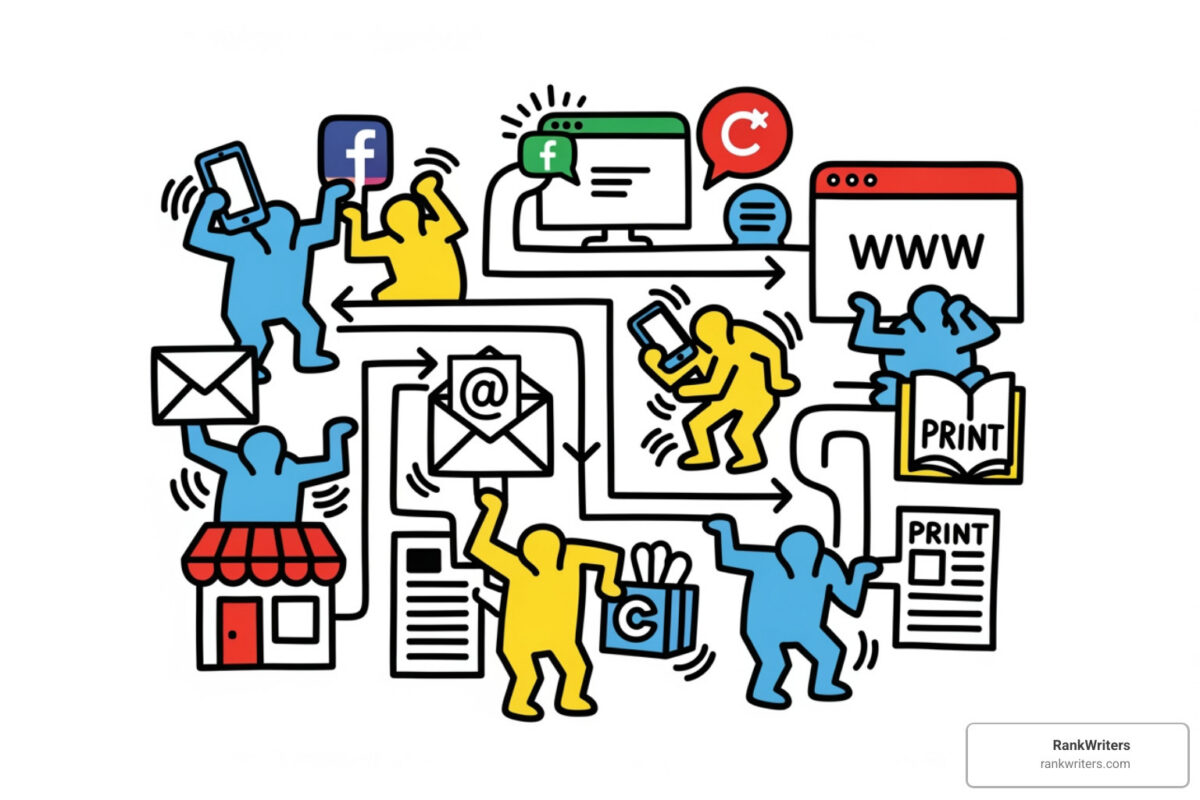
Aesthetic practice content marketing is the strategic use of educational, visual, and trust-building content to attract, nurture, and convert patients online across search, social, and email channels.
Here’s what that looks like in practice:
| Content Goal | Content Type | Where It Works |
|---|---|---|
| Build awareness | Educational blogs, Reels, TikToks | Google, Instagram, TikTok |
| Build trust | Before/after galleries, case studies | Website, Instagram |
| Drive conversions | Patient testimonials, booking CTAs | Website, email |
| Retain patients | Email newsletters, seasonal campaigns | Email, SMS |
| Dominate local search | Google Business Profile, local blogs | Google Maps, Search |
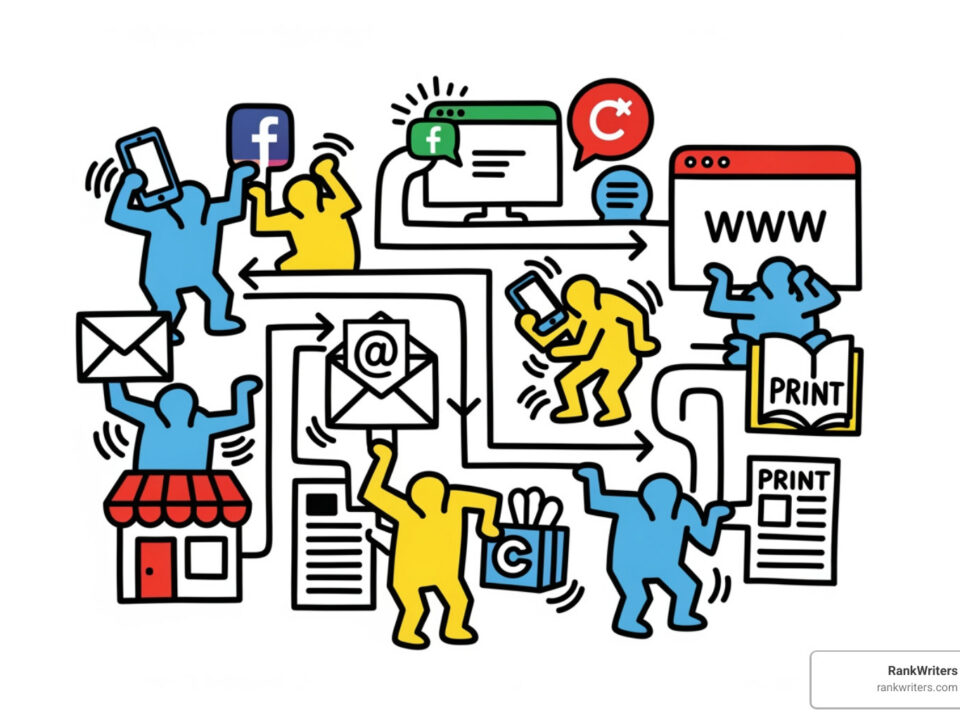
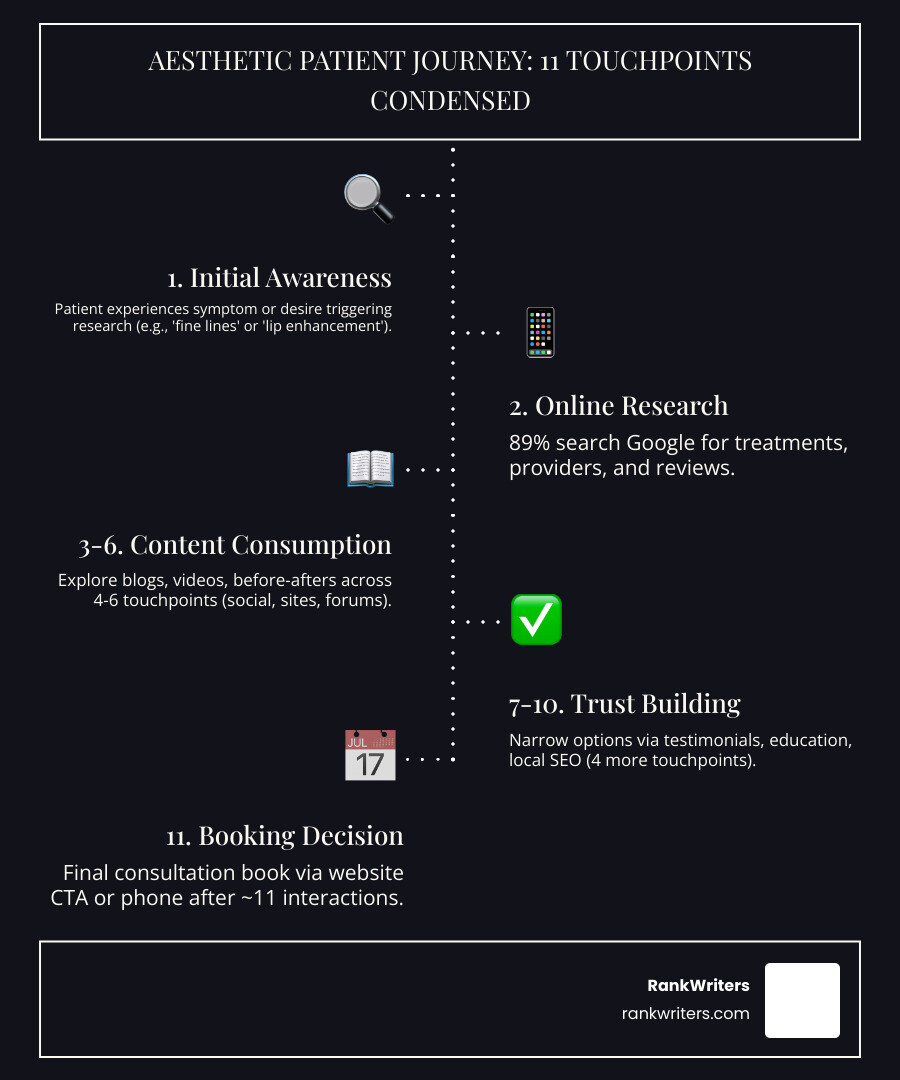
The numbers tell a clear story. 89% of patients research aesthetic treatments online before ever booking a consultation. And they don’t just glance at one page. Research suggests aesthetic patients go through roughly 11 touchpoints before they pick up the phone or hit “book now.”
That means your content either shows up across those touchpoints, or a competitor’s does.
Yet most aesthetic practices are still posting inconsistently, chasing likes instead of leads, and publishing promotional content that patients scroll right past. Educational content converts six times better than promotional content in healthcare settings. That gap is a massive opportunity for practices willing to be strategic.
This guide gives you a complete system for building content that fills appointment books, not just Instagram feeds.
Mastering Aesthetic practice content marketing in a Competitive Landscape
In the highly saturated world of medical aesthetics, technical excellence is no longer enough to sustain a growing practice. A practitioner might be the most skilled injector in Pennsylvania, but if their digital presence is a ghost town, prospective patients will simply book with the clinic that appeared first in their search results.
The shift from traditional advertising to Aesthetic practice content marketing is driven by the modern patient journey. Today’s patients are skeptical; they are looking for authority and proof before they commit to a procedure. Statistics from the American Society of Plastic Surgeons and other industry researchers indicate that educational content is the primary driver of trust. By providing high-value Plastic Surgery Content, a practice moves from being a service provider to a trusted advisor.
Consistency is the cornerstone of this mastery. Many clinics fall into the “post and pray” trap, where they upload a random photo once a month and wonder why the phone isn’t ringing. A systematic approach ensures that every piece of content serves a specific stage of the funnel: awareness, consideration, or decision. When a practice builds brand authority through consistent, high-quality information, it creates a moat around its business that price-cutters cannot cross.
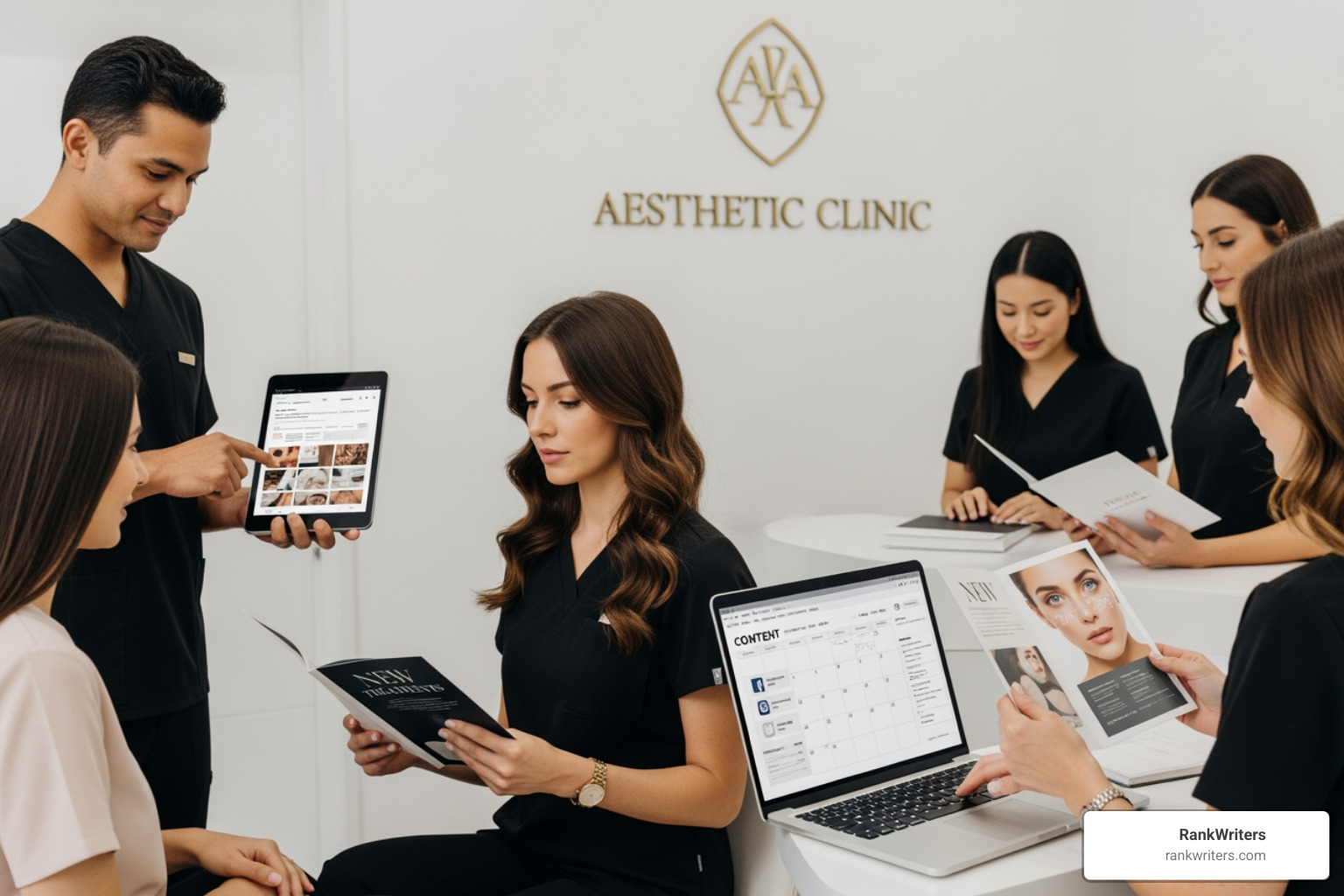
Identifying Your Ideal Patient Personas and Content Pillars
Effective marketing starts with knowing exactly who is being addressed. Generic content appeals to no one. To truly resonate, a practice must develop detailed patient personas.
Take “Career-Focused Sarah,” for example. She is a 42 year old professional in Westmoreland County who is starting to notice frown lines that make her look tired or angry in board meetings. Her fears aren’t just about the price; she is terrified of looking “fake” or “overdone.” Her aspirations are natural rejuvenation and maintaining a competitive edge in her career.
When a practice understands these psychologies, they can craft a Unique Value Proposition (UVP). If the UVP is “Natural Results for Busy Professionals,” every piece of content should reinforce that. This is how Plastic Surgery Lead Generation becomes effortless. Instead of shouting “Buy Botox,” the content addresses Sarah’s specific fear by showing subtle, “did-she-or-didn’t-she” transformations.
Content Pillars for Aesthetic Success
To stay organized, practices should lean on three to four content pillars:
- Educational Anchors: Deep dives into how treatments work (e.g., “The Science of Neuromodulators”).
- Social Proof: Real stories and results that prove the UVP.
- Behind the Scenes: Humanizing the “white coat” to reduce clinical anxiety.
- Lifestyle & Maintenance: Tips for skin health that keep the brand top-of-mind between appointments.
Leveraging Visual Proof and Educational Authority
In the aesthetics industry, seeing is believing. However, static, highly filtered photos are losing their power. Patients now look for “Visual Proof” that feels authentic and transparent.
The American Society of Plastic Surgeons highlights that high-quality, standardized before-and-after galleries are the most visited pages on any clinic website. To elevate this, practices are now using 360-degree treatment reveals and immediate reaction videos. Seeing a patient’s genuine “Wow!” moment after a non-surgical nose job is far more persuasive than a side-by-side photo that could be edited.
Educational authority is built by answering the questions patients are too shy to ask. This includes addressing the “price elephant” in the room or creating “Healing Diaries.” A healing diary tracks a patient from Day 1 (swelling and redness) to Day 30 (final result). This manages expectations and reduces post-op anxiety, which is a key part of patient retention.
Effective Educational Content Types
- Myth-Busting Mondays: Debunking common misconceptions (e.g., “Fillers will migrate if you sleep on your side”).
- Ingredient Spotlights: Explaining the “why” behind medical-grade skincare.
- Procedure Deep-Dives: 60-second videos explaining who the treatment is for and what the sensation feels like.
- Comparison Guides: “Filler vs. Threads: Which is right for your jawline?”
Ethical Considerations for Aesthetic practice content marketing
While the goal of content is growth, medical ethics must remain the priority. Patient privacy is non-negotiable. Using patient photos requires explicit, written consent that specifies where the images will be used (e.g., website only vs. social media).
Furthermore, practices must navigate strict advertising regulations. While the Advertising Standards Authority (ASA) provides a strong framework for ethical cosmetic interventions, US-based practices must also adhere to HIPAA regulations and state-specific medical board guidelines.
Professionalism is your best marketing tool. Avoid “sensationalist” claims or promising “guaranteed” results. Instead, focus on “expected outcomes” and “patient safety protocols.” This not only keeps the practice legally safe but also attracts a higher-tier patient who values safety over a bargain.
Multi-Channel Distribution and Local SEO Dominance
Creating great content is only half the battle; the other half is making sure it gets seen. A multi-channel strategy ensures that a practice meets patients wherever they are scrolling.
- Instagram: The visual portfolio. 67% of aesthetic patients discover practitioners here. A mix of 40% Stories, 35% Feed Posts, and 25% Reels is a proven ratio for engagement.
- TikTok: The reach engine. This is ideal for myth-busting and quick, satisfying treatment videos that can go viral and introduce the brand to a younger demographic.
- YouTube: The trust builder. Long-form videos allow for detailed explanations of complex surgeries, which is essential for high-ticket procedures.
For practices in specific regions like Westmoreland County, SEO for Plastic Surgeons is what turns local searches into bookings. Since 46% of all Google searches are local, an optimized Google Business Profile (GBP) is mandatory. This means uploading fresh photos weekly, responding to every review, and using local keywords in your posts.
The Role of SEO in Aesthetic practice content marketing
SEO is no longer just about stuffing keywords into a blog post. It is about “Topic Authority.” Google’s AI Overviews (formerly SGE) now appear in 68% of healthcare searches. To show up there, content must be structured to answer conversational questions.
Instead of just targeting “Botox Pennsylvania,” a smart strategy targets “How long does Botox last in the forehead?” or “What is the difference between filler and skin boosters?” These high-intent, long-tail keywords have 60% less competition and position the clinic as the definitive answer to the patient’s problem.
High-Intent Keywords to Target:
- “Best [Treatment] near me”
- “[Treatment] recovery timeline”
- “Non-surgical [Area] lift cost”
- “What to expect during [Procedure]”
Nurturing Leads Through Email and Automation
Many clinics lose thousands of dollars every month by ignoring the “invisible” 84% of researchers who visit their site but aren’t ready to book today. This is where email marketing and automation bridge the gap.
Email marketing is the only channel where a practice truly owns its audience. While social media algorithms change, an email list is a direct line to interested leads. According to HubSpot, email generates an average of $42 for every $1 spent (HubSpot, 2023).
A Ultimate Guide to Repurposing Content for Plastic Surgeon Email Marketing suggests taking a high-performing blog post and breaking it down into a five-part welcome sequence. When a new lead downloads a “Pre-Treatment Guide,” they should receive a series of automated emails that educate them, show them results, and eventually invite them to a consultation.
| Feature | Organic Social Media | Email Marketing |
|---|---|---|
| Reach | 2-5% of followers | 20-30% open rates |
| Ownership | Platform-owned | Practice-owned |
| ROI | Hard to track | $42 per $1 spent |
| Purpose | Discovery & Awareness | Nurturing & Retention |
Frequently Asked Questions about Aesthetic Marketing
How do I start a lean content strategy?
You don’t need a film crew to start. A smartphone and a ring light are enough. Begin by filming 12 pieces of content in one afternoon: four “Frequently Asked Questions,” four “Before-and-After” breakdowns, and four “Behind-the-Scenes” clips. Post these three times a week on Instagram. This “batching” method ensures consistency without taking hours away from your clinical work.
What are the most common content marketing mistakes?
The biggest mistake is focusing on “vanity metrics” like likes and followers instead of “commercial intent.” A video of a doctor dancing might get 10,000 views, but it rarely results in a booked filler appointment. Another common error is failing to have a clear Call to Action (CTA). Every piece of content should tell the patient exactly what to do next: “DM us ‘GLOW’ to book” or “Link in bio for our price guide.”
How do I measure content marketing ROI?
Track your “Lead Source” religiously. Ask every new patient, “Where did you first hear about us?” Use Google Analytics to see which blog posts are driving traffic to your booking page. If a specific “Lip Filler FAQ” blog post has 500 visits and 10 people clicked “Book Now” from that page, you can directly attribute those leads to your content efforts.
Conclusion
Aesthetic practice content marketing is not a luxury; it is the engine that drives modern practice growth. By moving away from generic promotion and toward high-value, educational storytelling, clinics can build a predictable stream of inbound leads.
RankWriters specializes in this exact systematic approach. By combining traditional SEO for Plastic Surgeons with future-proof AEO and GEO strategies, they help practices move from being invisible to being the obvious choice in their local market. In an industry built on aesthetics, make sure your digital presence is as polished and professional as the results you deliver in the clinic.