

In 2025, marketers need tools that help navigate growing challenges like managing multiple channels, analyzing vast data, and creating personalized content. With AI adoption at an all-time high, these tools are designed to save time, improve efficiency, and deliver measurable results. Here’s a summary of the top marketing tools to consider:
- HubSpot: All-in-one platform for automation, data management, and analytics. Starts at $15/month.
- Descript: Simplifies video and audio editing with text-based tools. Free plan available; premium starts at $24/month.
- Buffer: Social media management with scheduling and analytics. Free plan; paid plans from $6/month per channel.
- Mailchimp: Email marketing and automation with a focus on customer journeys. Free plan; premium starts at $9.99/month.
- Looker Studio: Advanced data visualization and analytics. Free and Pro versions available.
- Asana: Project management for marketing workflows. Free plan; premium starts at $10.99/month.
- Notion: Customizable workspace for collaboration and AI-powered tools. Free plan; paid plans from $8/month.
- GRIN: Influencer marketing platform with e-commerce integration. Starts at $999/month.
- ChatGPT Enterprise: AI-driven platform for content creation, customer support, and analysis. Custom pricing.
Quick Comparison Table
| Tool | Key Feature | Starting Price | Best For |
|---|---|---|---|
| HubSpot | All-in-one marketing platform | $15/month | Automation & analytics |
| Descript | Text-based video/audio editing | Free/$24/month | Content production |
| Buffer | Social media scheduling | Free/$6/month | Social media management |
| Mailchimp | Email marketing automation | Free/$9.99/month | Email campaigns |
| Looker Studio | Data visualization & reporting | Free/$9/month | Analytics & reporting |
| Asana | Marketing project management | Free/$10.99/month | Workflow organization |
| Notion | Customizable team workspace | Free/$8/month | Collaboration & planning |
| GRIN | Influencer marketing management | $999/month | Creator partnerships |
| ChatGPT Enterprise | AI-powered marketing solutions | Custom pricing | Enterprise AI integration |
These tools cater to different needs, from content creation and social media management to data analytics and influencer marketing. Whether you’re a small team or a large enterprise, selecting the right combination of tools can help you stay ahead in 2025.
Top 10 AI Tools For Digital Marketing in 2025
1. HubSpot
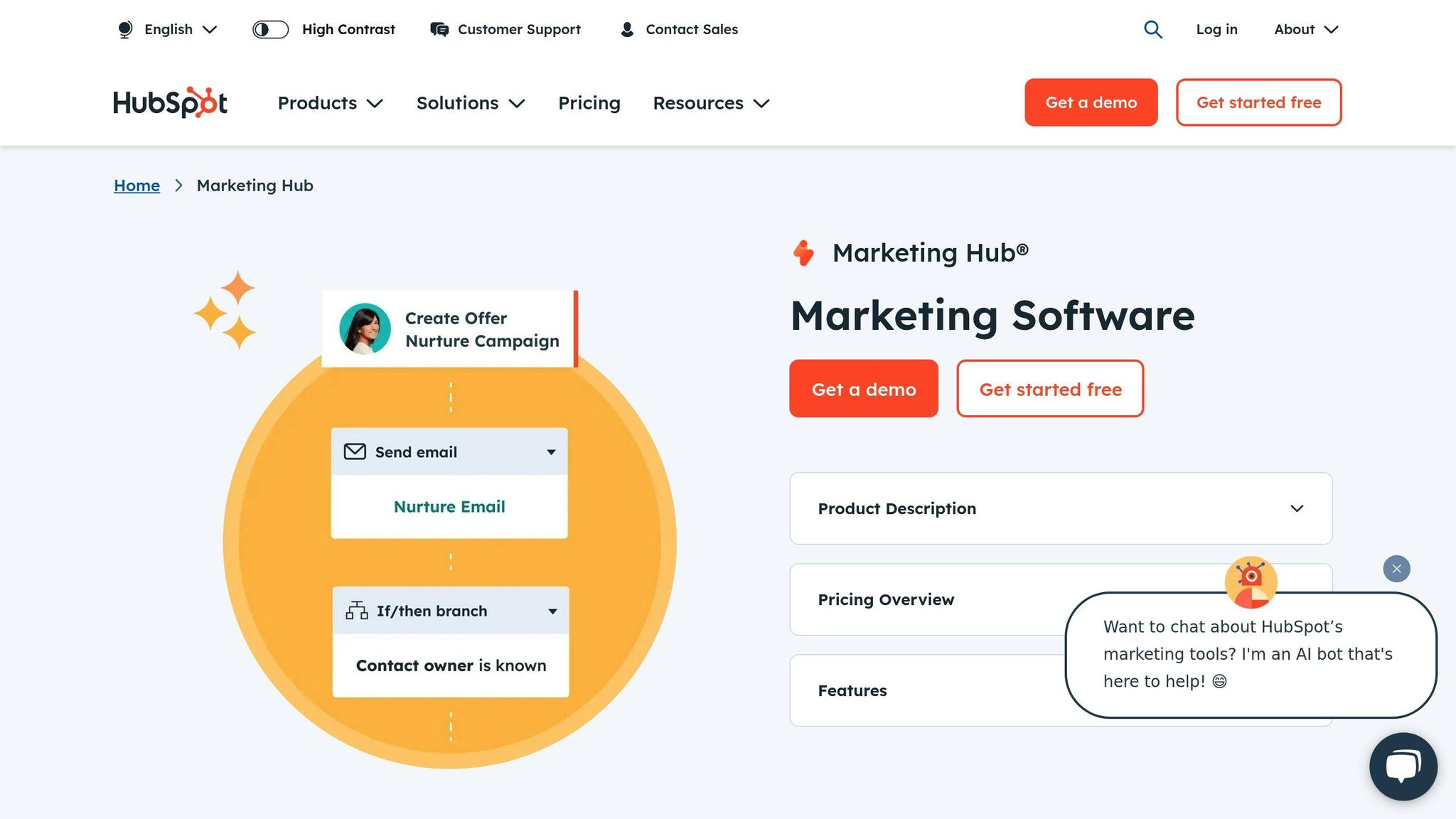
HubSpot continues to be a leading all-in-one marketing platform in 2025, serving businesses across the globe [2]. Its latest advancements bring powerful tools for data management, automation, and analytics, setting a high bar for marketing technology.
One standout feature is the introduction of four Breeze Agents, designed to automate key marketing and sales tasks. These agents have proven effective, with over 50% of support tickets resolved automatically and ticket closure times reduced by nearly 40% [3][4].
HubSpot shines in three main areas:
| Feature Category | Capabilities | Business Impact |
|---|---|---|
| Data Management | Centralized contact records, unified interactions | A reliable, single source of truth for marketing efforts |
| Marketing Automation | AI-optimized email timing, content suggestions, workflow automation | Saves 4 hours per sales rep each week [7] |
| Analytics & Integration | Multi-touch attribution, GA4 integration, e-commerce connections | Delivers $8.71 ROI for every dollar spent [7] |
Kevin Lamberth from Central Carolina Scale highlights the platform’s versatility, using it to route leads, create segmented lists, automate email campaigns, and enable real-time Slack notifications [6].
HubSpot’s EVP of Product, Andy Pitre, underscores the platform’s accessibility and practicality:
“SMBs don’t need more AI hype – they need technology that helps. The products we’re launching at the Spring 2025 Spotlight are helping teams move fast on AI and solve their go-to-market challenges. We’ve embedded AI throughout our entire platform so businesses of any size can start seeing value immediately, without massive teams or budgets.” [3]
HubSpot offers flexible pricing options to accommodate various needs, starting at $15/month for Starter plans and scaling up to $150/seat/month for Enterprise solutions [5]. Its 2025 updates – like AI-driven email optimization, customizable templates, and advanced segmentation – have led to a 36% increase in customer retention and a 38% improvement in sales forecast accuracy [7].
2. Jasper
Jasper has become a go-to AI writing assistant for 2025, trusted by over 100,000 businesses [10]. Its all-in-one Marketing AI Toolkit simplifies content creation while ensuring brand consistency.
Here’s a closer look at what the Marketing AI Toolkit offers:
| Feature | What It Does | Why It Matters |
|---|---|---|
| Marketing Editor | Creates brand-specific content | Speeds up content production |
| Brand Voice Configuration | Adjusts tone and style to fit your brand | Keeps messaging consistent |
| AI Image Suite | Generates custom visuals instantly | Delivers branded images in seconds |
| Marketing Apps Library | Includes 90+ marketing tools | Covers a wide range of marketing needs |
Jasper’s real-world impact is impressive. For example, Cushman & Wakefield saved 10,000 hours of work, commercetools launched campaigns 93% faster, and BestPlaces achieved an 800% increase in traffic [8].
Mark Wollney, SVP of Operations at MERGE, highlighted Jasper’s strategic role:
“This isn’t just about staying relevant in a rapidly evolving industry; it’s about leading the way.” [8]
Pricing Plans
Jasper offers flexible pricing to suit different team sizes and needs:
- Creator Plan: $49/month per seat
- Pro Plan: $69/month per seat
- Business Plans: Custom pricing [10]
Key Integrations and Features
Jasper works seamlessly with tools like Surfer SEO and Grammarly [9]. It also supports instant translations in over 30 languages, making it a great fit for global teams [11].
The platform’s adaptive brand voice feature has delivered measurable results, such as a 40% traffic increase for Bloomreach [8]. With a stellar 4.8/5-star rating from more than 10,000 reviews [10], Jasper continues to earn high praise.
To support teams, Jasper provides free training through Jasper Jumpstart and connects users via a thriving Facebook community of over 70,000 members [11]. Jasper showcases how AI can revolutionize marketing workflows and drive meaningful results.
3. Descript

Descript simplifies video and audio editing for marketers by using a text-based editing approach. With AI-driven tools and a focus on collaboration, it makes professional-grade content creation achievable for teams, regardless of their technical expertise [12].
Key Features and Performance
| Feature | Benefit | Impact |
|---|---|---|
| Text-Based Editing | Edit videos by directly modifying transcripts | Reduces editing time by up to 75% |
| AI Transcription | Delivers 95% accuracy for clear recordings | Speeds up content repurposing |
| Studio Sound | Eliminates background noise and echoes | Produces polished, professional audio |
| Collaborative Tools | Enables real-time team editing | Improves workflow efficiency |
Sam Brace, Senior Director of Customer Education and Community, highlights the platform’s value:
“I’d tell anybody new to video: without Descript, you’re going to find yourself stuck in an editing abyss.” [14]
Real-World Impact
The Podcast Haven showcased Descript’s capabilities by cutting their post-production time by 40% in 2025. Their team now transforms podcast episodes into blog posts and promotional materials within minutes, allowing them to expand their content reach without needing extra resources [13].
Advanced Features for Marketers
Descript provides a range of tools designed to simplify and enhance content creation:
- 4K Video Export: Included in Creator and Business plans for high-resolution output
- AI Voice Cloning: Generate voice-overs without additional recording sessions
- Multi-Track Editing: Handle complex projects with ease
- Automatic Subtitles: Improve accessibility for all audiences
- Screen Recording: Perfect for creating professional tutorials
Pricing Structure
Descript offers flexible plans tailored to different needs:
- Free: Includes basic features with 720p export ($0/month)
- Creator: Unlocks full features with 4K export ($24/month, billed annually)
- Business: Adds team collaboration tools ($40/month, billed annually)
- Enterprise: Custom solutions with API access (Pricing upon request) [12]
Balázs N., a marketing professional, shares their experience with the platform:
“With Descript we can create videos for our YouTube channel and our LinkedIn page much faster and with high quality.” [14]
Descript seamlessly integrates with platforms like Wistia, YouTube, and Podbean, making it easier to distribute content across channels [15]. Its comprehensive features fit smoothly into broader marketing workflows, paving the way for the next tool in our lineup.
4. Buffer
Buffer is a popular social media management platform, trusted by over 100,000 businesses as of 2025 [18]. It’s designed to simplify content scheduling across multiple platforms while offering detailed analytics and tools for team collaboration.
Core Features
| Feature | Benefit | Application |
|---|---|---|
| Multi-Platform Scheduling | Supports 11 social networks | Manage content across all channels in one place |
| AI Assistant | Generates and optimizes content | Creates tailored variations for specific platforms |
| Analytics Dashboard | Tracks performance and provides insights | Helps refine strategies with data-driven decisions |
| Team Management | Unlimited collaborators | Simplifies approval processes and team workflows |
Specialized Tools for Marketing Teams
Buffer includes advanced tools to enhance marketing efforts:
- A Calendar View for visualizing and planning content.
- Start Page for creating custom landing bio links.
- In-depth audience analytics for better targeting.
- An AI-powered content assistant to streamline content creation [16].
Pricing Options
Buffer’s pricing is structured to fit teams of all sizes and budgets:
- Free: $0/month (up to 3 channels)
- Essentials: $6/month per channel
- Team: $12/month per channel
- Agency: $120/month (10 channels)
Nonprofits can take advantage of a 50% discount on all paid plans [19]. These options make Buffer accessible while supporting seamless integration with other tools.
Integration with Other Tools
Buffer connects effortlessly with a variety of essential marketing tools, including:
- Content Sources: WordPress, Pocket, Instapaper
- Analytics: Google Analytics
- Automation: IFTTT, Zapier
- Monitoring: Mention, Quuu [16]
With a 4.4 out of 5-star rating [17], Buffer earns high marks for ease of use (4.6/5) and customer support (4.5/5). Its combination of user-friendly features and integrations makes it a valuable resource for modern content strategies.
5. Mailchimp
As marketers in 2025 look for smarter and more integrated tools, Mailchimp stands out as a go-to solution for managing customer journeys and automating outreach. With over 12 million users relying on the platform for email marketing and automation [21], Mailchimp continues to distinguish itself with its focus on customer journeys and competitive pricing [20]. Let’s dive into the features that make Mailchimp a powerful ally for marketers in 2025.
Core Features and Capabilities
| Feature Category | Capabilities | Benefits |
|---|---|---|
| Email Marketing | Drag-and-drop editor, A/B testing | Build professional campaigns without design expertise |
| Automation | Customer journey builder, triggered emails | Save time with automated workflows |
| Analytics | Performance tracking, ROI measurement | Make informed, data-driven decisions |
| Integration | 300+ app connections | Simplify and unify marketing operations |
Mailchimp goes beyond the basics with advanced AI tools designed to elevate your campaigns. Features like the AI-powered Content Optimizer and Creative Assistant help craft engaging, on-brand content. Plus, with a deliverability rate exceeding 99%, you can trust that your messages will consistently reach their audience [24].
Pricing Structure
Mailchimp offers flexible pricing plans to fit businesses of all sizes:
- Free: $0/month (basic features included)
- Essentials: Starting at $9.99 per user/month
- Standard: Starting at $14.99 per user/month
- Premium: Starting at $299 per user/month [20]
Performance and Recognition
Mailchimp processes an impressive 500 million emails every day [24]. It also has an 88% peer recommendation rate [22] and holds a solid 4.3/5-star rating on Gartner Peer Insights, based on feedback from 1,180 users [22].
Integration Capabilities
One of Mailchimp’s standout strengths is its ability to integrate seamlessly with a wide range of tools, including CRM systems, e-commerce platforms, and social media apps. These integrations allow marketers to:
- Sync customer data automatically
- Build targeted segments based on user behavior
- Monitor campaign performance across multiple channels
- Manage subscribers more efficiently [23]
Best Practices
To get the most out of Mailchimp, consider these strategies:
- Segmentation: Group your audience by behavior and demographics for tailored messaging.
- Personalization: Use dynamic content and custom fields to make campaigns feel personal.
- Testing: Regularly conduct A/B tests to refine and improve your campaigns.
- Automation: Leverage behavioral triggers to engage with customers at the right time [25].
Mailchimp’s ease of use, combined with its robust automation tools, makes it an excellent choice for small to medium-sized businesses aiming to scale their marketing efforts in 2025. Whether you’re new to email marketing or a seasoned pro, Mailchimp provides the tools you need to succeed.
6. Looker Studio

Looker Studio is a powerful platform designed to simplify complex data, transforming it into insights that can guide strategic marketing decisions. With both a free version packed with essential features and a Pro version for more advanced needs, it has become a go-to tool for reporting and analytics in 2025.
Core Features and Integration
One of the standout aspects of Looker Studio is its ability to connect with over 800 data sets through more than 620 connectors [27]. This flexibility allows marketers to seamlessly integrate data from various sources, including:
| Integration Type | Examples | Best For |
|---|---|---|
| Google Connectors | GA4, Google Ads, YouTube | Analytics within Google platforms |
| Partner Connectors | Facebook Ads, LinkedIn | Marketing data across platforms |
| Community Connectors | Custom tools, niche platforms | Tailored reporting needs |
Advanced Visualization Capabilities
Looker Studio shines when it comes to creating interactive and visually appealing dashboards. Some of its visualization highlights include:
- Interactive dashboards with real-time updates for actionable insights.
- Customizable templates that simplify report creation.
- A drag-and-drop interface for easy customization.
- Responsive layouts that work seamlessly across devices.
Pricing Structure
Looker Studio offers flexible pricing options to suit different needs:
- Free Version: Includes essential features at no cost [26].
- Pro Version: Costs $9 per user per project monthly [26].
- Enterprise Version: Tailored for larger teams, with pricing ranging from $3,000 to $5,000 monthly for a 10-person team [28].
Data Management Features
The platform offers a range of tools to streamline data handling, making it easier for marketers to extract meaningful insights:
- Centralized management of marketing metrics.
- Custom calculated fields for tailored analytics.
- Query result variables for dynamic and flexible reporting.
- Geospatial mapping for analyzing location-based data.
These features ensure marketers can organize and interpret their data effectively, even when dealing with complex metrics.
Performance Considerations
While Looker Studio is packed with features, there are a few challenges to keep in mind. Real-time updates can sometimes lead to lag, and the initial setup may require technical expertise. Additionally, heavy data operations might slow down performance.
Best Practices for Marketers
To get the most out of Looker Studio, consider these tips:
- Set Clear Objectives: Identify the metrics and data sources that matter most to your goals before diving into report creation.
- Leverage Templates: Use pre-built templates to jumpstart your reporting process.
- Prioritize Key Metrics: Focus on the most important KPIs to prevent overwhelming your audience with too much data.
- Automate Updates: Schedule regular report refreshes to keep your data current and accurate.
7. Asana

Asana has become a go-to project management tool for marketing teams in 2025, with 85% of Fortune 100 companies relying on it to manage their workflows effectively [29]. It simplifies processes, tracks campaigns, and fosters better collaboration among teams.
Features Tailored for Marketers
| Feature | Marketing Benefit | Use Case |
|---|---|---|
| Calendar View | Manage timelines visually | Plan content schedules and campaigns |
| Customized Templates | Automate and standardize workflows | Speed up content creation and approvals |
| Smart Status | Track progress automatically | Generate real-time performance reports |
| Goal Tracking | Link tasks to strategic goals | Focus work on high-priority objectives |
Smarter Workflow Management
Asana offers customizable templates that automate everything from content creation to campaign launches. Matt Maynard, Head of Brand & Advertising at Asana, highlights the importance of staying organized:
“We’re constantly building new campaigns, collaborating with teams across the company, and managing a lot of deadlines. If we’re not on top of every detail of our content marketing process, and aligned across teams, it’s easy for even the most important elements to slip through the cracks.” [30]
These features, paired with seamless integrations, make Asana a robust tool for marketers.
Seamless Integration with Marketing Tools
To streamline operations, Asana connects with over 200 tools [31], ensuring teams can work without switching between platforms. Key integrations include:
- Communication Tools: Microsoft Teams, Slack
- Design Platforms: Canva
- Marketing Automation: Mailchimp, HubSpot
- File Storage Services: Google Drive, Dropbox
These integrations allow marketing teams to stay coordinated and efficient.
Flexible Pricing Options
Asana’s pricing structure accommodates a range of team sizes and needs:
- Free Personal Plan: Includes unlimited tasks and storage for up to 15 users
- Starter Plan: $10.99 per user/month (billed annually)
- Premium and Enterprise Plans: Tailored pricing for larger teams
Real-World Impact
Asana’s own content marketing team showcases how the platform can streamline workflows by combining automation with strategic oversight, ensuring every detail is accounted for.
Advanced Performance Tracking
One standout feature is Asana’s AI-powered Smart Status, which automatically generates progress summaries and shares updates with stakeholders. This ensures tasks align with business goals while maintaining team autonomy. By blending automation with actionable insights, Asana empowers marketing teams to work smarter and achieve their objectives more efficiently in 2025.
sbb-itb-16c0a3c
8. Notion
Notion has become a go-to workspace platform for marketing teams, boasting over 100 million users globally. Impressively, 62% of Fortune 100 companies rely on its features to streamline their operations [34]. By combining documents, project management, and team collaboration into a single customizable environment, Notion is reshaping how marketing teams work.
AI-Powered Marketing Features
Notion’s AI tools are designed to make marketing workflows more efficient. Here’s how they help:
| Feature | Purpose | Benefit |
|---|---|---|
| AI Writing Assistant | Content creation and editing | Faster production and better content |
| Smart Search | Knowledge base navigation | Quick access to key resources |
| AI Autofill | Database management | Automated data handling and analysis |
| Q&A Function | Information retrieval | Instant answers to campaign questions |
Enhancing Team Collaboration
Notion stands out as a central hub, especially for remote and hybrid marketing teams. With 86% of leadership identifying poor collaboration as a major workplace issue [33], Notion addresses this gap by fostering seamless teamwork.
“This campaign wasn’t about saying, ‘Here’s why you should try Notion.’ It was about people sharing their own stories of how they use it and why it matters to them. Personal stories and emotional connections are what set us apart from every other productivity app running ads. It’s those moments that build trust and make performance marketing more effective later.”
- Danielle, Notion’s Influencer Marketing Team [32]
The impact of this approach was evident in the January 2025 “Notion Faces” campaign, which resulted in over 900 pieces of user-generated content, thanks to collaborations with more than 50 creators [32].
Seamless Tool Integration
Notion’s ability to connect with other tools is another reason it’s so effective for marketing teams. It offers:
- Direct Integrations: Connect with tools like Google Calendar, Slack, and Google Sheets.
- Automation Platforms: Use Zapier to access over 5,000 app connections.
- Custom Solutions: Take advantage of its API for tailored workflows.
One marketing firm reported cutting client feedback processing time by 60% through automated workflows powered by Notion [36]. These integrations make it easier than ever to manage complex marketing operations.
Pricing Options
Notion offers a range of pricing plans to suit different team sizes and needs:
- Free plan for small teams
- Plus: $8 per user/month
- Business: $15 per user/month
- Enterprise: Custom pricing [35]
Proven Performance
Notion’s results speak for themselves. It has been recognized as the top knowledge base for three years running and is rated the best AI writing tool by G2 [34]. Its blend of functionality and ease of use makes it a standout choice for marketing teams looking to boost productivity.
9. GRIN
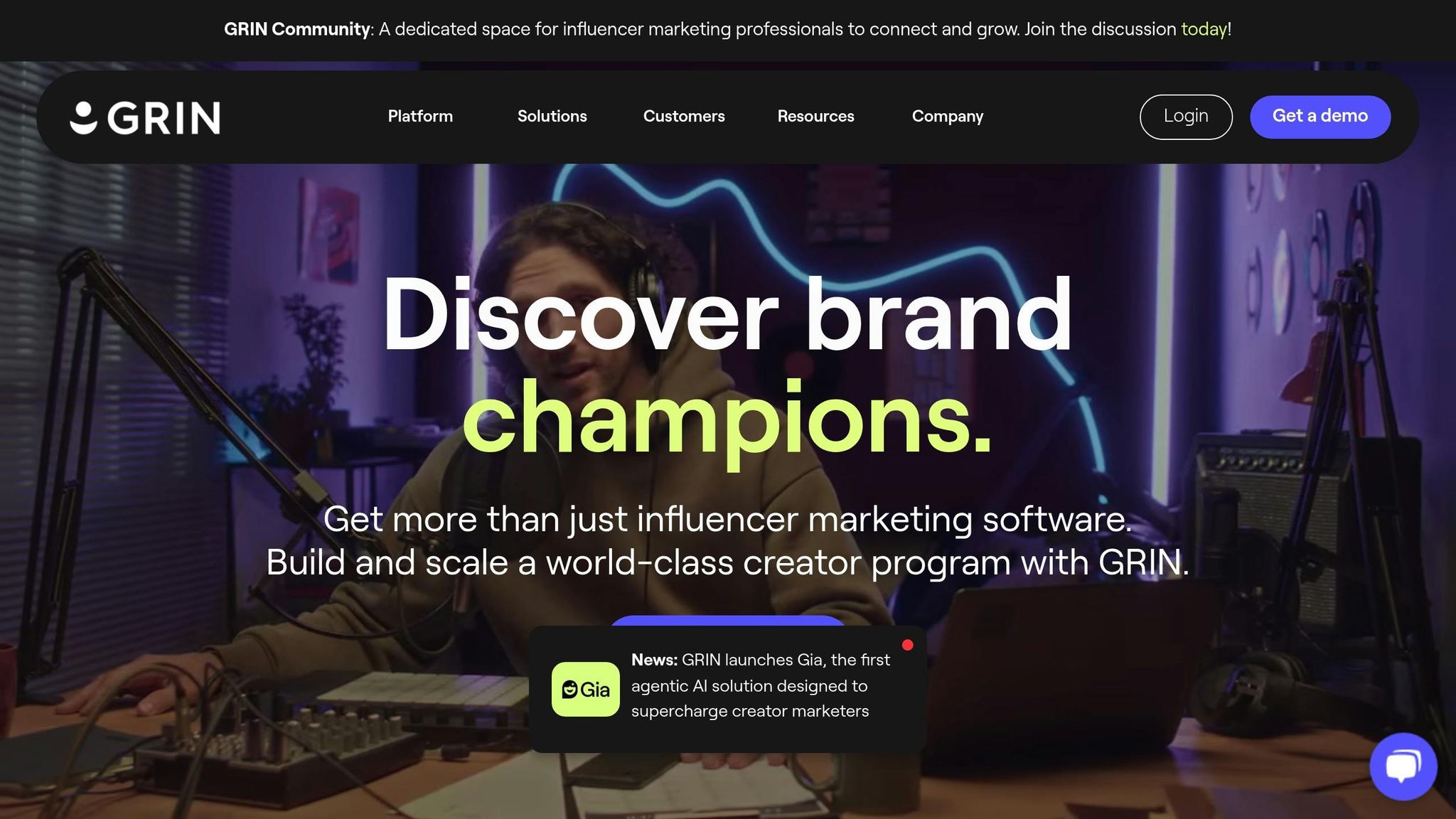
GRIN has transformed influencer marketing by making it easier for brands to find, manage, and expand their partnerships with creators. With access to over 38 million influencers [38] and a stellar 4.7/5 rating from 148 reviews [37], GRIN is a go-to solution for teams aiming to build genuine connections with creators.
Saving Time and Boosting ROI
One of GRIN’s standout benefits is its ability to save time and maximize returns. Here’s what the platform delivers:
| Metric | Impact |
|---|---|
| Time Saved | 61 hours per month on average |
| ROI Achievement | 183% average return |
| Program Scaling | Triple the partnership capacity |
These time and efficiency gains make GRIN a powerful tool for managing creator relationships.
Tools for Creator Management
GRIN goes far beyond basic automation, offering a suite of features designed to streamline every aspect of influencer collaboration:
- Content Library: A centralized hub to organize, search, and analyze creator content based on performance metrics, post types, and visuals [41].
- E-commerce Integration: Seamless connection with online stores for product gifting and tracking sales [39].
- Payment Processing: Automated tools to manage creator compensation efficiently.
- Campaign Analytics: Real-time tracking of ROI and the ability to create custom reports [38].
These features make it easier for brands to manage campaigns and measure success.
Real-World Results
Companies using GRIN have shared impressive outcomes. For example, Keri O’Brien, Director of Marketing and Sales at Darn Good Yarn, noted that their team reduced staff hours from 1.5 employees to just 0.5 while tripling their creator partnerships [40]. Similarly, Brian Wood, Digital Marketing Manager at Boiron USA, highlighted:
“We are running more influencer campaigns every year and are going to double what we did last year, and we wouldn’t be able to do that without GRIN” [40].
These success stories underline how GRIN helps brands scale their efforts without overloading their teams.
Advanced ROI Tracking
GRIN’s reporting tools provide detailed insights that help brands justify their influencer marketing investments. Marketers can track everything from creator-driven sales and discount code usage to content engagement and overall campaign ROI [38]. This level of precision makes it easier to fine-tune strategies and demonstrate value.
Pricing and Value
GRIN’s pricing starts at $999 per month [37], with options for customized plans based on a business’s specific needs [39]. While the cost may seem steep, the platform’s comprehensive features and proven ROI make it a worthwhile investment for brands looking to scale their influencer marketing programs.
As Keri O’Brien aptly put it:
“GRIN takes everything you know you want from an influencer marketing platform and integrates it with your e-commerce platform, unlocking essential features” [39].
Given that 74% of consumers are influenced by creator recommendations when making purchases [40], GRIN is positioned as a vital tool for modern marketing strategies heading into 2025.
10. ChatGPT Enterprise
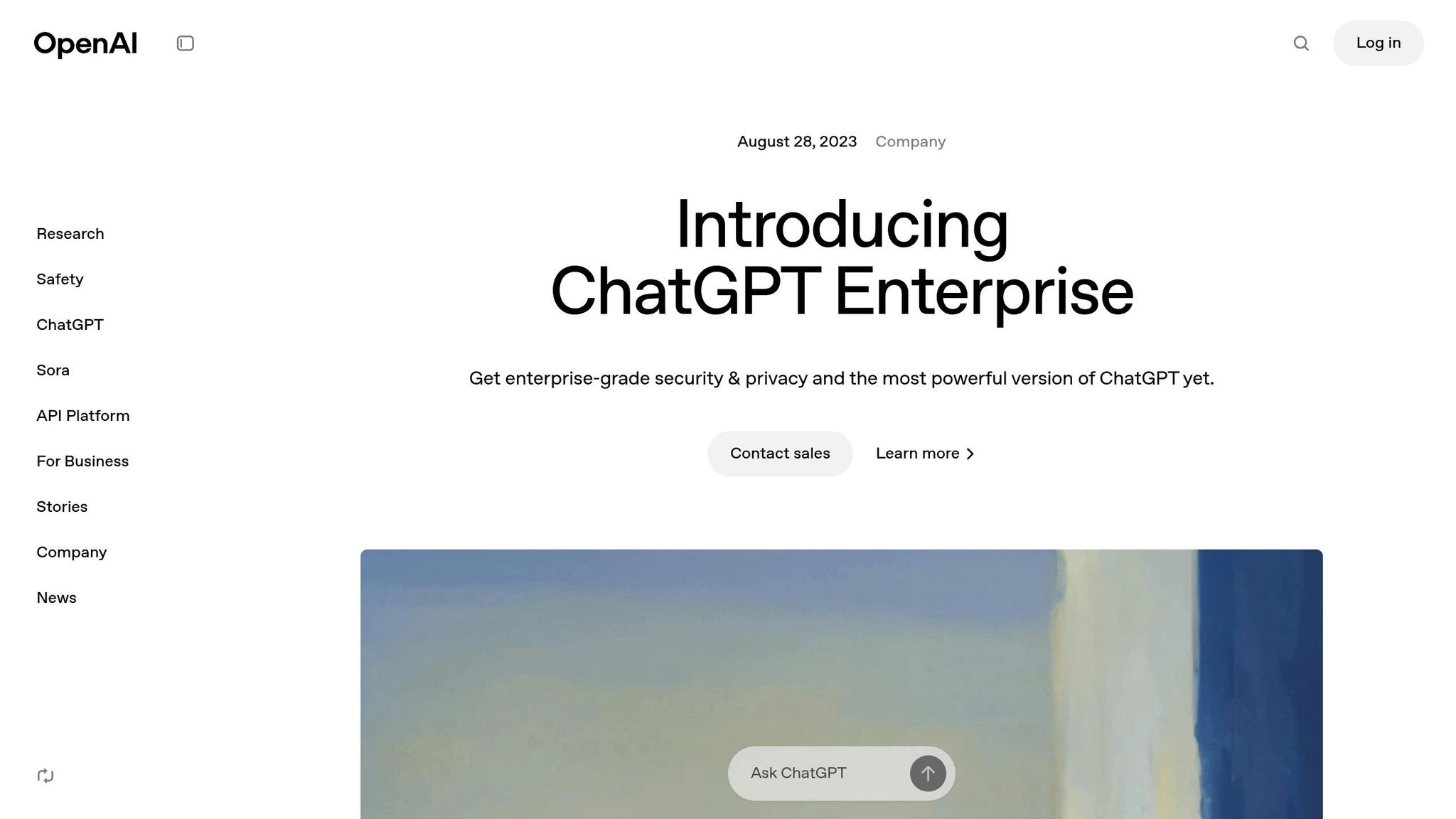
ChatGPT Enterprise takes AI-driven marketing tools to the next level, offering businesses a robust solution to streamline their operations. Already adopted by teams in over 80% of Fortune 500 companies [43], this enterprise-grade platform provides unlimited access to GPT-4, advanced security features, and tools for tailored customization.
Performance Metrics That Drive Results
Companies using ChatGPT Enterprise have reported noticeable improvements in their workflows:
| Metric | Impact |
|---|---|
| Work Quality | 40% improvement |
| Task Completion | 12.2% increase |
| Task Speed | 25.1% faster |
| Research Time Saved | 1 hour daily |
Features Built for Enterprises
This version of ChatGPT comes packed with features designed for high-performance teams:
- 32k Context Window: Handles inputs up to four times longer.
- Faster Processing: Works at twice the speed.
- Advanced Security: Meets GDPR and CCPA compliance with encrypted data.
- Seamless Integration: Connects effortlessly with tools like CRM, ERP, and other marketing platforms [42].
Practical Marketing Applications
The platform isn’t just about numbers – it’s making a tangible difference in how businesses operate. Jorge Zuniga, Head of Data Systems and Integrations at Asana, shared:
“ChatGPT Enterprise has cut down research time by an average of an hour per day, increasing productivity for people on our team. It’s been a powerful tool that has accelerated testing hypotheses and improving our internal systems” [43].
In another example, a multinational bank saw a 30% boost in response accuracy after using ChatGPT Enterprise for customer interactions [42]. These real-world results highlight its ability to improve marketing efficiency and effectiveness.
Tailored for Marketing Teams
ChatGPT Enterprise is designed to meet the unique needs of marketing teams, offering tools for:
- Creating content across various platforms
- Automating customer support
- Conducting real-time market analysis
- Delivering personalized communication
- Optimizing campaigns
Sebastian Siemiatkowski, CEO of Klarna, underscores its value:
“At Klarna, we are constantly seeking innovative solutions to strengthen our employees’ abilities and enable them to best serve our 150 million active users across the globe. With the integration of ChatGPT Enterprise, we’re aimed at achieving a new level of employee empowerment, enhancing both our team’s performance and the customer experience” [43].
Pricing and ROI
The platform’s pricing is tailored to each organization, requiring a minimum of 150 seats with a 12-month commitment. Most companies see measurable ROI within the first year [42][44]. Beyond routine task optimization, ChatGPT Enterprise supports strategic decision-making.
Danny Wu, Head of AI Products at Canva, highlights its versatility:
“From engineers troubleshooting bugs, to data analysts clustering free-form data, to finance analysts writing tricky spreadsheet formulas – the use cases for ChatGPT Enterprise are plenty. It’s become a true enabler of productivity, with the dependable security and data privacy controls we need” [43].
For marketing teams aiming to scale operations without compromising on quality, ChatGPT Enterprise offers a forward-thinking solution for 2025. Its combination of efficiency, security, and adaptability makes it a standout tool in the AI-powered marketing landscape.
New Marketing Tools to Watch
As we step into 2025, a wave of new marketing tools is transforming how businesses connect with their audiences. Here’s a closer look at some of the standout tools tackling today’s marketing challenges.
AI-Powered Analytics Platforms
AI continues to drive innovation, especially in analytics. Tools like MarkovML offer no-code platforms that simplify complex data analysis, making it accessible even to teams without technical expertise [47]. Meanwhile, GWI Spark goes a step further by using proprietary survey data to deliver deep consumer insights – an alternative to the traditional reliance on scraped data [45].
Customer Behavior Analysis Tools
Understanding customer behavior is crucial, and FullStory is setting a new standard with its Fullcapture technology. This platform provides a complete picture of user interactions while adhering to stringent security standards.
| Feature | Benefit |
|---|---|
| Zero Configuration | Easy and immediate deployment |
| Data Capture | Comprehensive behavioral insights |
| Real-time Analysis | Instant mapping of user journeys |
| Security | Fully GDPR and CCPA compliant |
Campaign Automation Innovation
AI is reshaping campaign management, and NinjaCat‘s AI Agents are leading the charge. These tools enable real-time ad spend tracking and refine ad copy through their Content Creation Agent. This reflects a growing trend, with 54% of marketers already incorporating AI into their strategies [1].
Emerging Social Search Tools
Search behavior is shifting. With traditional search traffic expected to decline by 25% by 2026 [1], and 79% of consumers predicted to adopt AI-enhanced search tools next year [1], marketers are focusing on optimizing for social search platforms to stay competitive.
Data Privacy Solutions
Data privacy remains a top concern, with 8 in 10 consumers expressing worries about how their data is used [46]. New tools are addressing this by balancing personalization with privacy. This is critical, as 75% of consumers prefer to shop with brands that offer personalized experiences [46].
“Rather than seeing AI as this dystopian view as peddled by Elon Musk of robots coming to take our jobs, they will carry out tasks for you. They’re not particularly creative. They’re not particularly strategic. They don’t operate well on small amounts of information. There’s a few models that are getting better at it, but they can’t think like we do.” – Jim Lecinski, Clinical Professor of Marketing, Kellogg School of Management [1]
These tools highlight the ongoing evolution of marketing technology, offering solutions that are efficient, tailored, and mindful of privacy concerns.
Selecting Marketing Tools for Your Team
Picking the right marketing tools in 2025 isn’t just about jumping on the latest trends – it’s about finding a balance between cutting-edge features and practical functionality. With 82% of marketers agreeing that AI adoption can enhance productivity and financial results [48], it’s clear that thoughtful planning is essential when making your choices.
Assess Your Team’s Structure and Needs
The makeup of your team plays a big role in determining which tools will work best. For smaller teams focused on core marketing tasks, function-based structures often benefit from all-in-one solutions. Medium-sized teams, organized around specific channels like social media or content marketing, may need more specialized tools [50].
| Team Structure | Best Tool Approach | Typical Budget Focus |
|---|---|---|
| Function-based (Small) | All-in-one solutions | Core functionality |
| Discipline-based (Medium) | Specialized tools | Channel-specific features |
| Product-based (Large) | Enterprise platforms | Scalability & integration |
Evaluate AI Capabilities
AI is no longer a luxury – it’s becoming a necessity. With 51% of marketing teams already using AI for tasks like content optimization and campaign planning [48], tools with strong AI capabilities should be a priority. Look for features such as:
- Content creation and optimization to keep your messaging sharp.
- Customer behavior analysis to better understand your audience.
- Campaign performance prediction to guide decision-making.
- Automated reporting to save time and improve accuracy.
“Rather than seeing AI as this dystopian view as peddled by Elon Musk of robots coming to take our jobs, they will carry out tasks for you. They’re not particularly creative. They’re not particularly strategic. They don’t operate well on small amounts of information. There’s a few models that are getting better at it, but they can’t think like we do.”
– Jim Lecinski, Clinical Professor of Marketing at Kellogg School of Management [1]
Consider Integration and Scalability
Take a close look at your current tech stack. How well do your existing tools work together? Integration is key to streamlining data flow and boosting team productivity [48]. Depending on your needs, you might choose between a best-of-breed approach (using specialized tools for specific tasks) or an all-in-one solution that covers multiple functions [49].
Budget and ROI Considerations
When evaluating potential tools, don’t just look at the upfront cost. Factor in subscription fees, implementation expenses, and training requirements [53]. Also, assess the ROI potential – 79% of marketing executives report improved ROI when they strategically incorporate AI into their processes [48]. Be sure to select tools that can scale as your business grows [52].
Privacy and Security
Data privacy is a growing concern, with 8 in 10 consumers worried about how their information is used [46]. To address these concerns, prioritize tools that offer:
- Compliance with regulations like GDPR and CCPA.
- Strong data encryption to protect sensitive information.
- Transparent policies on data handling.
- Regular updates to address security vulnerabilities.
Implementation Strategy
Once you’ve chosen the right tools, a smooth rollout is essential. Here’s how to approach it:
- Pilot Program
Start small. Deploy the tool in a limited capacity to identify any potential issues and gather feedback. This method has been effective for 73% of companies implementing generative AI in marketing [51]. - Training and Support
Equip your team with the knowledge they need to succeed. Comprehensive training programs will help ensure everyone can make the most of the new tools. Keep in mind that 77% of professionals expect AI to significantly impact their work in the next five years [48]. - Performance Monitoring
Set clear metrics to measure success. Whether it’s boosting productivity, improving campaign results, or enhancing customer engagement, track how the tool performs against your goals.
Summary: Building Your Marketing Tool Stack
Creating a marketing tech stack that meets today’s needs while preparing for tomorrow’s demands is no small feat. This section pulls together key insights from detailed tool reviews and strategies to help you design an integrated system that delivers results and stays efficient.
Core Components for Success
To make your stack effective, focus on integrating AI-powered tools. Research shows 40% of brands plan to adopt generative AI tools in their operations, a move that aligns with the fact that 48% of personalization leaders are more likely to surpass revenue goals [54].
Here’s a breakdown of the essential components to consider:
| Stack Component | Key Consideration | Impact Metric |
|---|---|---|
| AI Integration | Hyper-personalization | 75% of consumers are more likely to make a purchase [54] |
| Data Management | First-party data focus | Ensures compliance with privacy regulations |
| Customer Experience | Unified channels | Drives consistent engagement across platforms |
| Analytics | Performance tracking | Optimizes ROI and measures success effectively |
With these foundational elements in place, your marketing stack will be well-positioned for both immediate impact and long-term growth.
Strategic Implementation
Your tech stack should directly support your business goals while leaving room for growth. A good benchmark for marketing ROI is a 5:1 ratio, with top-performing campaigns reaching 10:1 [55]. This ensures that your technology investments are not only justified but also contribute to ongoing improvements.
Once your stack aligns with your objectives, it’s equally important to prepare for what’s ahead by focusing on key future trends.
Future-Proofing Your Stack
Looking ahead, by 2025, generative AI is expected to become a critical component of nearly all enterprise software, contributing an estimated $10 billion in revenue for software companies [54]. To stay competitive, prioritize these areas when building your stack:
- Data Privacy: Bolster security measures to comply with changing privacy laws.
- Integration Capabilities: Ensure all tools communicate seamlessly for a smooth workflow.
- Scalability: Invest in solutions that can expand with your business as it grows.
- Customer-Centric Features: Opt for tools that enhance personalization and improve engagement.
FAQs
What’s the best way to choose the right marketing tools for my team in 2025?
Choosing the Right Marketing Tools for Your Team in 2025
Finding the perfect marketing tools for your team starts with understanding your specific needs and goals. Think about factors like the size of your team, your marketing objectives, your budget, and how your current workflows operate. For instance, if content creation is a major focus, AI-driven tools such as Jasper or Copy.ai could be incredibly useful. Meanwhile, social media teams might find platforms like Buffer or Later more aligned with their day-to-day tasks.
It’s also important to pick tools that integrate smoothly with your existing systems, minimizing any potential disruptions. Scalability should be another priority – opt for tools that can grow alongside your team and adapt to evolving requirements. By matching your tool selection to your team’s unique challenges and long-term plans, you’ll create a tech stack that genuinely supports your goals.
What should I consider when adding AI tools to my marketing tech stack?
Integrating AI Tools into Your Marketing Tech Stack
When adding AI tools to your marketing tech stack, the first step is to ensure they work well with your existing systems. Look for tools that offer API support or connectors, which can help you avoid data silos and prevent disruptions in your workflow.
It’s also essential to set specific goals for using AI. Whether you’re aiming to improve analytics, streamline repetitive tasks, or create more personalized customer experiences, having clear objectives will guide you in selecting tools that fit your needs. Focus on tools that are not only effective but also easy to use and come with strong support or training options. This will make it simpler for your team to adopt and use them effectively.
Lastly, don’t overlook the importance of team training. A team that’s confident in using AI can unlock its full potential, leading to smarter decisions and better results for your marketing strategy.
How can I protect data privacy and stay compliant while using advanced marketing tools?
To protect data privacy and stay compliant with regulations when using advanced marketing tools in 2025, it’s essential to have a solid grasp of key laws. These include the General Data Protection Regulation (GDPR) and U.S. state-specific rules like the California Consumer Privacy Act (CCPA). Start by ensuring your practices are transparent – this means getting clear user consent and securely handling any data you collect.
Opt for tools that come with privacy-focused features, such as automated consent management systems and strong data encryption. These can make compliance much easier. It’s also a good idea to routinely audit your data processes and keep up with changes in privacy laws. By committing to ethical data practices, you not only reduce legal risks but also strengthen the trust your audience places in your brand.