

Why Guessing Hurts Your Content Performance
Data-driven content creation is the practice of using audience behavior, performance metrics, and search insights to guide what you create, how you distribute it, and when you optimize it. Instead of relying on gut feelings, you let the numbers tell you what your audience actually wants.
Here’s what data-driven content creation looks like in practice:
- Before creating – Use keyword research, competitor gaps, and audience surveys to identify topics that will resonate.
- During creation – Structure content based on top-performing formats and optimize for readers and search engines.
- After publishing – Track engagement metrics, conversion rates, and SEO performance to understand what’s working.
- Continuous improvement – Refine your strategy by doubling down on successes and eliminating what doesn’t deliver results.
Feeling frustrated with your content’s performance? You’re not alone. 74% of consumers report frustration with irrelevant content, meaning three out of four people may be scrolling past what you worked hard to create.
The problem isn’t a lack of effort, but the gap between creating content and creating content that actually connects. Traditional content marketing relied on intuition, publishing what felt right and hoping it stuck. In today’s saturated digital landscape, hope isn’t a strategy. With constant algorithm changes and AI reshaping search, guesswork is a massive disadvantage.
Data-driven content creation flips this approach. It starts with understanding who you’re talking to, what they’re searching for, and how they engage. That intelligence then fuels every decision, from headlines to distribution channels.
The shift isn’t just philosophical. 72% of marketers cite improved marketing efficiency as the top benefit of data-driven strategies. They spend less time on content that fails and more time scaling what works, building a repeatable system for leads and revenue.
It’s both an art and a science: the art of crafting compelling stories, and the science of knowing which stories to tell, to whom, and when.
I’m Brandie Young, a Fractional CMO and GTM strategist who has spent years helping brands like yours turn content into a revenue engine through data-driven content creation. My approach combines AI-powered insights with proven marketing frameworks to help overwhelmed leaders generate consistent inbound results without the guesswork.
The “What” and “Why”: Shifting from Gut Feelings to Guaranteed Impact
Ever created content you were sure would be a hit, only for it to fall flat? That’s traditional content creation: a shot in the dark based on intuition. Data-driven content creation changes that by letting you serve your audience exactly what they crave.
At its core, it’s about using relevant data to inform every step of your content journey. Instead of guessing, you use insights from analytics to align marketing efforts with real audience needs. It’s about moving from “I think this will work” to “The data proves this will work.”
Here’s how traditional and data-driven approaches stack up:
| Metric | Traditional Content Creation | Data-Driven Content Creation |
|---|---|---|
| Targeting | Broad assumptions, demographics only | Granular segmentation (psychographics, behavioral, intent data) |
| Personalization | Generic, one-size-fits-all | Highly custom messages, offers, and formats based on individual preferences and journey stage |
| ROI Measurement | Difficult, often anecdotal | Clear KPIs, measurable impact on leads, sales, and revenue |
| Adaptability | Slow, reactive | Agile, continuous optimization based on real-time performance data |
| Efficiency | Wasted effort on irrelevant content | Improved marketing efficiency (72% of marketers cite this as a top benefit), focusing resources on what works |
| Audience Clarity | Limited, superficial | Greater clarity on target audience (62% of marketers report this benefit), understanding pain points and motivations |
This shift is why data-driven content creation is essential in the digital age.
Why It’s Critical in Today’s Digital Landscape
The digital landscape is saturated, making attention a precious commodity. With 74% of consumers frustrated by irrelevant content, the old ways are no longer enough. If you don’t provide value, your audience will scroll past. Today’s consumers expect personalization, and generic content erodes trust. Understanding audience behavior through data allows you to deliver content that resonates, creating a significant competitive advantage.
For more insights, check out our article on Content Marketing Statistics: 45 Data-Driven Insights. The question isn’t if content marketing is important, but how we make it effective, which we explore in Why Content Marketing is a Critical Effort in 2021.
Key Benefits of a Data-Driven Approach
Adopting a data-driven approach offers benefits that directly impact your bottom line.
- Increased ROI: Focusing on content that drives leads and sales increases your return on investment. Data-driven marketing can deliver up to a 5:1 ROI.
- Higher Engagement Rates: Personalized content leads to more likes, shares, and comments, fostering a deeper connection with your audience.
- Improved Efficiency: As 72% of marketers agree, data helps you work smarter by focusing resources on what yields the best results, avoiding wasted effort.
- Increased Customer Loyalty: Consistently delivering valuable content builds trust and loyalty. Nearly half of marketers report this benefit.
- Better Decision-Making: Data replaces assumptions with facts, ensuring every decision is grounded in evidence for more impactful outcomes.
- Fueling New Product Development: Data can also reveal unmet customer needs, which 35% of marketers use to fuel new product development.
Data-driven content creation transforms content from a cost center into a revenue engine, a topic we dig into more deeply in How Content Marketing Drives Sales.
Your 5-Step Framework for Data-Driven Content Creation
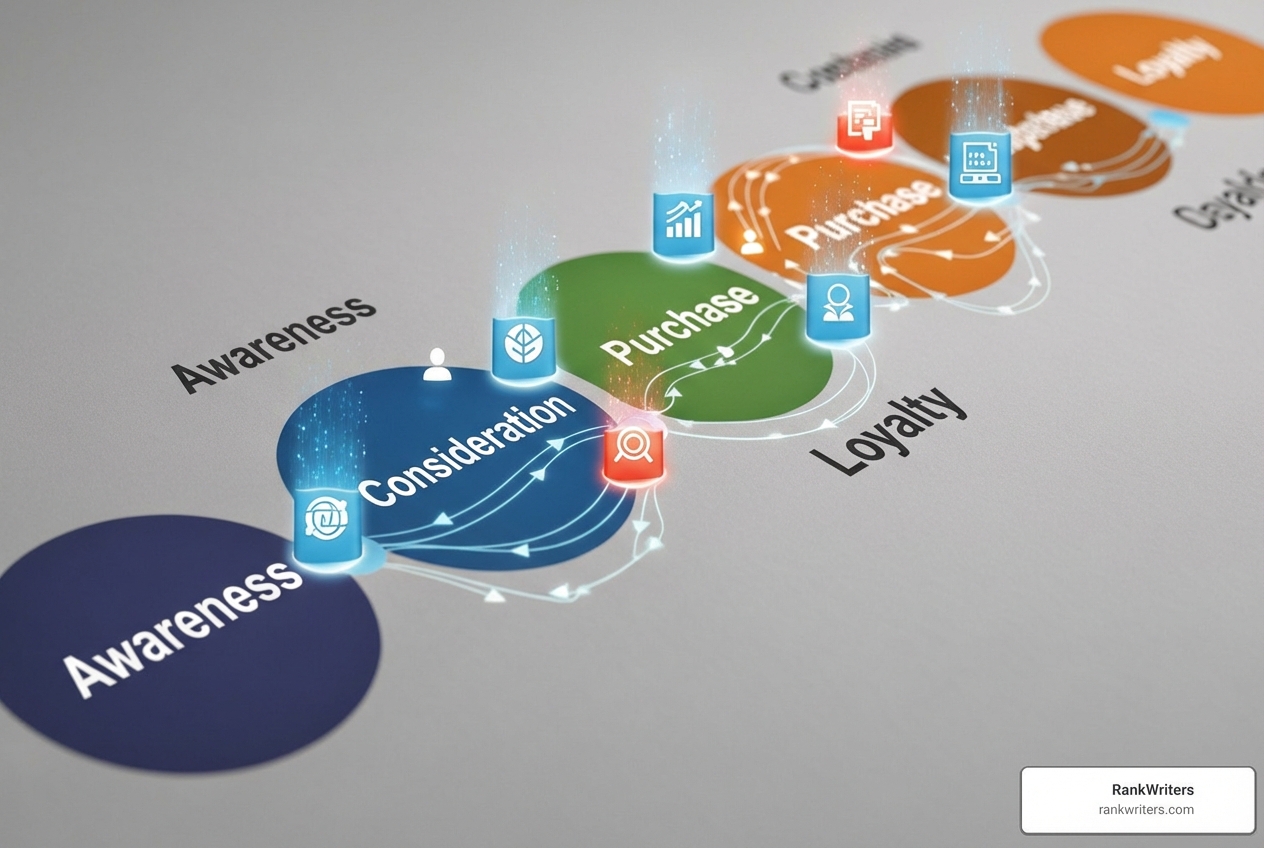
Building a data-driven content strategy is manageable with this five-step framework. Think of it as a continuous improvement loop: a clear path from data to results.
Step 1: Define Goals and Understand Your Audience
First, define what you want to achieve and for whom. This step is about setting clear, measurable goals and deeply understanding your audience.
- Setting SMART Goals: Align content efforts with business objectives. For example, a SMART goal is “increase B2B demo requests by 15% in 60 days,” not just “get more signups.”
- Moving Beyond Demographics: Basic demographics are a start, but to truly understand viewer behavior and preferences, you need to dig deeper into:
- Psychographics: Their values, interests, opinions, and motivations.
- Behavioral Data: How they interact with your website, emails, and social media.
- Intent Data: Their search queries and whether they are looking for information, comparing options, or ready to buy.
This deep understanding is crucial for matching content to search intent, as discussed in 5 Steps to Match Content to Potential Client Search Intent.
Step 2: Collect and Analyze the Right Data
Next, gather the intel. Effective data-driven content creation requires collecting high-quality data from various sources.
- First-Party Data: This is data you collect directly from your audience (website interactions, CRM, purchase history) and provides invaluable insights.
- Third-Party Data: This includes market research and industry trends, offering a broader view of customer preferences.
- Data Collection Tools: A robust tech stack is crucial for data collection:
- Web Analytics Platforms: Tools like Google Analytics are used by 66% of marketers to track traffic, user behavior, and conversions.
- CRM Systems: Used by 57% of marketers, these provide a centralized view of customer interactions.
- Marketing Automation Platforms: Used by 51% of marketers to manage campaigns and track engagement.
- Customer Data Platforms (CDPs): Used by 36% of marketers to unify customer data into a single profile.
- Social Listening Tools: Monitor online conversations to gauge sentiment and identify trends.
- SEO Tools: Platforms like Ahrefs, Semrush, and Moz are essential for keyword research and competitive analysis.
Analyzing this data informs your SEO Content Strategy.
Step 3: Develop Your Data-Informed Content Strategy
With goals, audience insights, and data, you can now craft a successful content strategy. This involves deciding what to create and how it will serve your audience.
- Topic Ideation: Use your data to reveal trending topics and common questions. Filter ideas from tools like a Blog Idea Generator for Endless Ideas through your data to identify what problems you can solve.
- Keyword Research: This is fundamental. Use tools to uncover relevant search queries and their intent, aligning keywords with audience needs at each journey stage. Understanding Why is Keyword Research Important? helps prioritize.
- Content Formats: Data reveals preferred content formats (videos, articles, infographics). Tailoring the format boosts engagement. For instance, visual and verbal information has a 65% recall rate after 3 days, compared to only 10% for written.
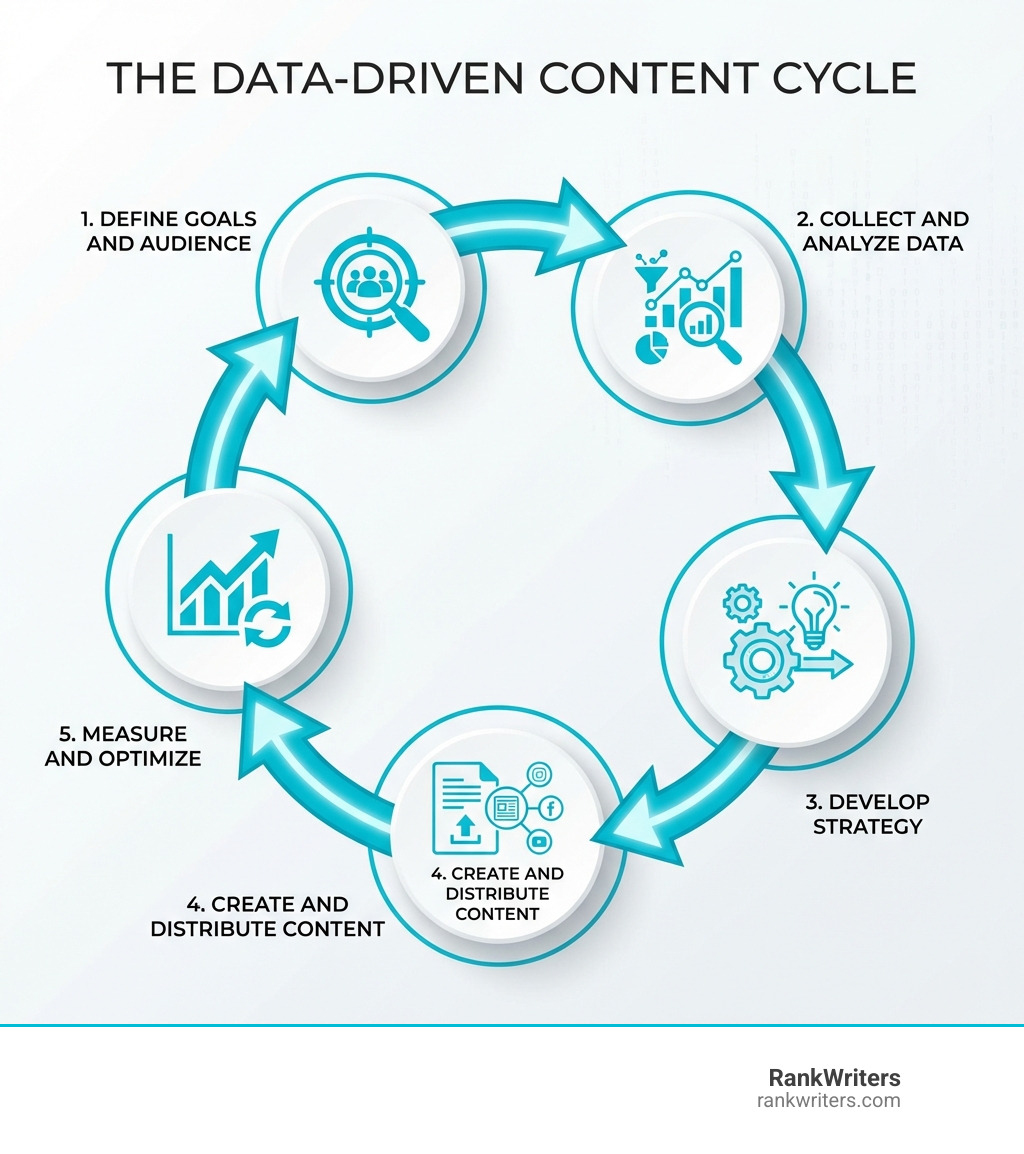
- Tailoring Content to the Customer Journey Stages: Data is key for personalizing content for each stage:
- Awareness Stage: Create educational, problem-focused content (blog posts, guides) based on broad topics people search for.
- Consideration Stage: Offer solutions and build trust with content like case studies and webinars.
- Decision Stage: Reinforce value and provide clear calls to action with testimonials, demos, and pricing guides.
Structuring content with a clear hierarchy, such as Pillar Content, can effectively guide users.
Step 4: Create, Optimize, and Distribute Content
This step is about creating and optimizing high-quality content and distributing it to the right audience.
- Content Creation and Optimization: Create valuable, trustworthy content custom to user needs. Optimize every piece with target keywords, clear headings, internal links, and compelling copy, as we do with our SEO Content Writing Services.
- Optimizing Distribution Channels: Use data to analyze which channels your audience uses most and optimize your distribution accordingly. Focus resources on high-performing channels.
- A/B Testing Headlines: A weak headline can sink great content. A/B test headlines, CTAs, and imagery to find what drives the highest engagement.
- Consistent Publishing Cadence: Consistency is key. A HubSpot study shows publishing 5-10 articles per month leads to a good ROI, keeping content relevant and traffic consistent.
- Content Repurposing: Use data to identify high-performing content and repurpose it into different formats (e.g., a blog post into an infographic) to extend its reach and value.
Measuring Success: KPIs and Tools for Your Strategy
Creating content is half the battle; knowing if it works is the other. For data-driven content creation, this means focusing on key performance indicators (KPIs) tied to business objectives, not vanity metrics.
Key Metrics for Evaluating Data-Driven Content Performance
Tracking the impact of your content is essential for determining ROI and identifying areas for improvement. Here are the key metrics to track:
- Engagement Metrics: These show how deeply your audience interacts with content.
- Time on Page / Session Duration: Longer times generally indicate higher engagement.
- Scroll Depth: How far down the page are users reading?
- Bounce Rate: Percentage of users who leave after viewing only one page. High rates can signal irrelevant content.
- Social Shares, Likes, Comments: Direct feedback on content value.
- Conversion Metrics: These demonstrate direct business impact.
- Leads Generated: Number of form fills or contact requests from content.
- Sales/Revenue: Revenue attributed to specific content.
- Email Sign-ups: Number of new email list subscribers from content.
- Audience Growth Metrics: These indicate your expanding reach.
- Organic Traffic: Visitors finding your content via search engines.
- Subscribers (Email, Social, Podcast): Growth of your audience base across platforms.
- Brand Mentions/Reach: Frequency of brand/content mentions across the web.
- SEO Metrics: These measure your visibility in search.
- Keyword Rankings: Your position in search results for target keywords.
- Impressions & Clicks (from Search): How often your content appears in search and gets clicked.
- Backlinks: Number of credible sites linking to your content, signaling authority.
By focusing on these metrics, we can effectively measure the success of our data-driven content marketing efforts. For an in-depth look at tracking ROI, especially with the latest tools, check out How to Measure ROI with Google Analytics 4.
Essential Tools for Collection and Analysis
To track these metrics, rely on a suite of powerful tools:
- Google Analytics (GA4): The cornerstone for tracking user behavior, traffic sources, and conversions.
- Google Search Console (GSC): Essential for understanding search performance, rankings, and technical SEO issues.
- CRM Platforms: Systems like Salesforce connect content engagement with sales outcomes.
- SEO Platforms: Tools like Ahrefs, Semrush, and Moz are used for keyword research, competitive analysis, and site audits.
- Social Media Analytics: Built-in or third-party tools help understand engagement and audience demographics on social platforms.
- Heatmap and Session Recording Tools: Visualize user behavior to see where they click, scroll, and spend time.
- Email Marketing Platforms: Mailchimp, HubSpot, and ConvertKit offer insights on open rates, click-throughs, and conversions from email.
For finding new content ideas, explore Top 10 Keyword Generator Tools (Including Free Versions).
Advanced Topics in Data-Driven Content Creation
Once you’ve mastered the basics of data-driven content creation, explore these advanced topics to further refine and future-proof your strategy.
The Role of AI and Automation in Enhancing Insights
AI and automation are transformative forces in data-driven content creation, enhancing insights and efficiency.
- AI-Driven Personalization: AI enables content personalization at scale, anticipating user needs to deliver individualized experiences, as highlighted in a recent Forbes report.
- Predictive Analytics: AI analyzes vast datasets to predict customer behavior, allowing for proactive content creation that addresses future needs.
- Automating Analysis: AI tools process data faster than humans, freeing up your team for strategic thinking. For example, 40% of marketers use AI for campaign optimization and another 40% for automating personalization.
- Generative AI for Content Ideation and Optimization: While human creativity is key, Generative AI can assist with research, outlines, and initial drafts, streamlining the creation of relevant content.
AI is evolving SEO, not killing it. We accept Generative Search Optimization to ensure content is impactful in this new era, a topic we explore in Is SEO Dead in 2025? No, But AI Changes the Game and Generative Search Optimization.
Overcoming Common Challenges
Recognizing and addressing these common challenges is key to long-term success.
- Data Quality Issues: Poor data quality is a major roadblock, leading to flawed insights and wasted spend. Nearly 50% of marketers struggle with data accuracy, with one in seven reporting financial losses as a result. Implement rigorous data validation and regular quality checks to combat this.
- Data Silos: Data often resides in disconnected silos (CRM, analytics). Breaking these down with integration or customer data platforms (CDPs) is crucial for a unified customer view.
- Lack of Skills: A skills gap often prevents marketers from acting on insights. While 97% of marketers use data, many review it infrequently. Invest in training and foster a data-driven culture.
- Correlation vs. Causation: Be careful not to confuse correlation with causation. Just because two data points are connected doesn’t mean one causes the other. When presenting data, be clear you are showing a connection, not that one thing directly leads to another, so you don’t imply causation.
Best Practices for Ethical Data Usage and Compliance
While pursuing insights, never lose sight of ethical responsibilities. Maintaining audience trust amid data privacy concerns is paramount.
- Transparency: Be transparent about what data you collect and why. A clear privacy policy builds trust.
- Consent: Obtain explicit consent for data collection and give users control over their data.
- Compliance: Strictly adhere to privacy regulations like GDPR and CCPA. Implement data protection measures like encryption to ensure compliance, as outlined in resources like Salesforce’s GDPR Solution.
- Security: Use robust security to protect collected data from breaches.
- Value Exchange: Ensure the personalization you offer provides genuine value to the user in exchange for their data.
By prioritizing ethical data usage, you build stronger, more trusting relationships with your audience.
Frequently Asked Questions about Data-Driven Content
How do I start if I have limited data?
Everyone starts somewhere. Don’t be deterred by a lack of historical data.
- Start with free tools: Google Analytics and Google Search Console are invaluable and free, offering immediate insights into traffic, user behavior, and search queries.
- Analyze your own content performance: Use SEO tools to see what’s working (or not) with your existing content.
- Conduct customer surveys: Ask existing customers what content they find helpful and what problems they’re trying to solve.
- Focus on qualitative data: Talk to your sales and customer service teams for insights into common questions and pain points.
What’s the most important metric to track?
The most important metric depends entirely on your specific goals.
- For awareness: Focus on organic traffic, reach, and brand mentions.
- For engagement: Track time on page, scroll depth, and social shares.
- For conversion: Monitor leads generated, sales, and email sign-ups.
Define your content’s purpose first, then identify the KPIs that align with that objective. For guidance, see our guide on How to Add Conversion Tracking to Google Analytics.
Can a small business effectively use a data-driven approach?
Absolutely. A data-driven approach isn’t just for large corporations. Small businesses can and should use data to compete effectively.
- Start small: Focus on one or two key channels and track basic metrics.
- Leverage free tools: Google Analytics and Search Console are powerful starting points.
- Focus on high-impact data: Identify the data that directly informs your most critical business objectives, like which content drives the most form submissions.
- Agility is your superpower: Small businesses can often adapt and iterate faster based on data insights.
Conclusion: Turn Data into Your Greatest Content Asset
In today’s digital landscape, data-driven content creation is a necessity. Moving beyond guesswork transforms your content into a predictable engine for engagement, leads, and sales.
By following a data-driven framework—from setting goals to continuous optimization—you gain a competitive edge. The future of audience engagement is personalized, proactive, and informed by the numbers behind the narratives.
At RankWriters, we specialize in helping businesses like yours harness the power of data to fuel their content fire. Our systematic approach combines SEO, AEO, and GEO insights to ensure your content not only ranks but also resonates, driving consistent inbound results. Don’t let your content be a shot in the dark. Let’s make every word count.
Learn why content marketing is a critical effort in 2025 and how to prepare your strategy.