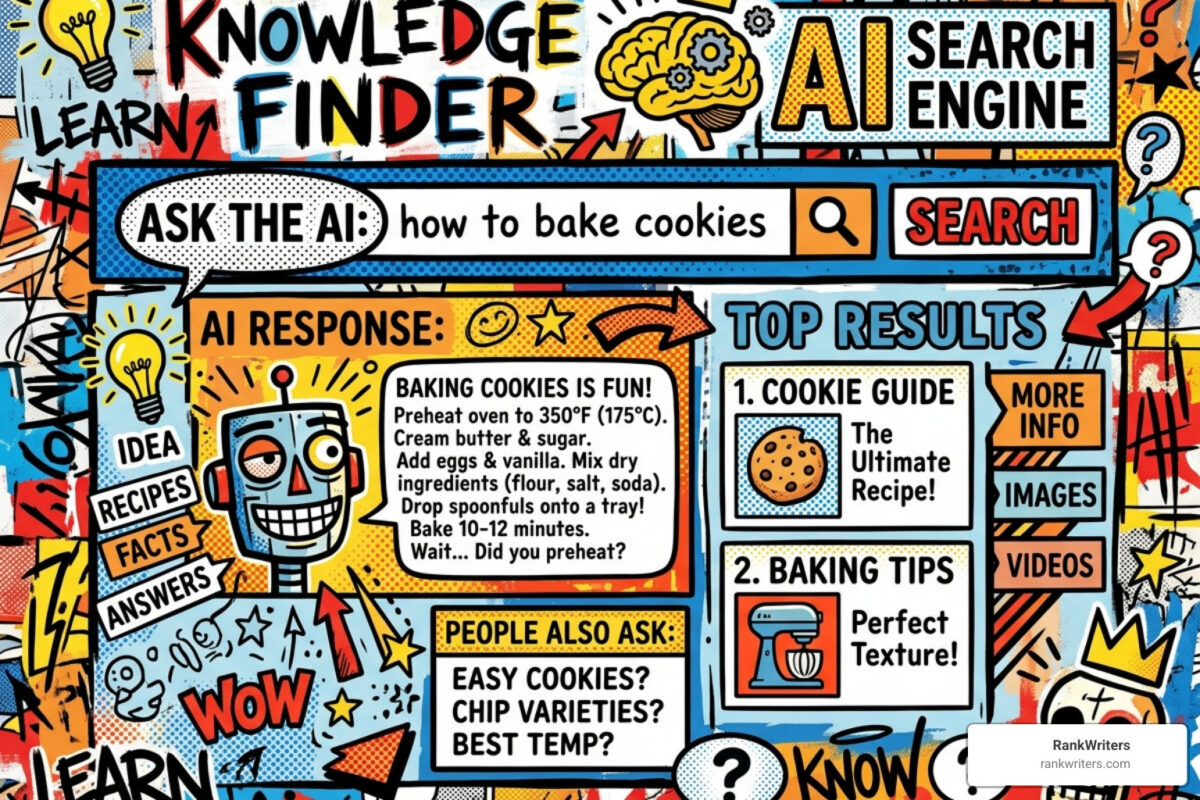


Generative AI is changing how people find information, shifting from keyword-based searches to conversational queries. Instead of relying on traditional SEO tactics, marketers now need to optimize content for AI-driven tools like ChatGPT and Perplexity. Here’s the key takeaway: Your brand’s visibility depends on how well AI systems can process and reference your content.
Key Points:
- AI is replacing traditional search: 66% of consumers expect AI to overtake search engines within five years.
- SEO isn’t enough anymore: Generative AI tools prioritize structured, in-depth, and machine-readable content.
- New metrics matter: Success is measured by how often AI systems cite your content, not just page rankings or clicks.
- Content structure is critical: Use clear headings, schema markup, and concise formats like FAQs to make your content AI-friendly.
- Authority builds trust: AI favors accurate, expert-driven content from reliable sources.
Action Steps:
- Audit your content for conversational relevance and structure.
- Train your team on schema markup and AI-friendly writing.
- Balance SEO with strategies for generative engine optimization (GEO).
- Track new metrics like AI answer inclusion rates and entity citations.
The shift to generative AI is happening now. Start preparing your content to stay visible and relevant in this evolving digital landscape.
How to Rank #1 in ChatGPT Results (AI SEO Strategy)

How Content Discovery Is Changing
The way people discover content is undergoing a major transformation. Instead of typing a few keywords into search engines and sifting through results, users are now engaging in more conversational and immediate interactions, often powered by AI.
How User Behavior Has Shifted
Today’s users are asking AI detailed, specific questions rather than relying on short keyword searches. For instance, instead of searching for “best CRM software”, someone might ask, “What CRM software is best for small businesses with limited budgets?” These more nuanced queries demand content that directly addresses complex, tailored questions.
This shift reflects a growing trend of users treating AI as a trusted advisor for in-depth topics. As a result, the way content is created and optimized must adapt to meet these evolving expectations.
Generative Engines vs. Traditional Search
Traditional search engines work by indexing and ranking content, giving users a list of links to explore. Generative AI, on the other hand, pulls information from multiple sources to craft direct, synthesized responses. This means your content could be referenced without users ever needing to click through to your site.
Some AI platforms provide clear attributions with links to original sources, but others may integrate information without explicit credit. For brands, this creates a new challenge: ensuring their content is optimized for inclusion in AI-generated responses. It’s no longer enough to rely solely on traditional SEO practices to maintain visibility.
Why SEO Alone Isn’t Enough Anymore
As AI reshapes how content is discovered, traditional SEO strategies are showing their limitations. While keywords still matter, they’re not the sole factor in ensuring visibility. Generative AI tools prioritize content that is clear, well-structured, and capable of answering detailed questions with accuracy and depth.
To thrive in this new environment, brands must go beyond focusing exclusively on metrics like page rank or click-through rates. Instead, they should aim to create content that not only ranks well but also stands out as a reliable source for AI-driven platforms. Clear explanations, accurate insights, and thoughtful organization are now key to staying relevant in the era of generative AI.
Core Strategies for Generative Engine Optimization (GEO)
As generative engines continue to transform how content is discovered, success requires a shift in strategy. You’ll need to focus on three interconnected areas: expanding knowledge, structuring content for AI, and establishing authority.
Focus on Knowledge Instead of Keywords
In traditional SEO, the goal was to target specific keywords and phrases. With Generative Engine Optimization (GEO), the focus shifts to entity relationships and delivering in-depth knowledge. Instead of cramming in keywords, prioritize clear and thorough explanations. For instance, if you’re writing about project management software, go beyond the basics. Explain its role in team collaboration, how it integrates with workflow automation, and its broader impact on productivity.
Think of your content as part of a larger web of related ideas. For example, content about email marketing should include connections to customer segmentation, lead nurturing, marketing automation, and customer lifecycle management. By doing this, you’re not just covering a topic – you’re building a comprehensive resource.
Generative AI thrives on clarity and depth. Define terms, explain processes step-by-step, and tie concepts to larger themes. This approach ensures your content isn’t just keyword-heavy but genuinely useful. The aim? To become the go-to source for your topic. AI systems naturally favor content that demonstrates expertise and covers a subject thoroughly.
But creating knowledge-rich content is only part of the equation. The way you structure it for AI is equally important.
Create Machine-Friendly, Structured Content
Generative AI processes information differently than humans. It’s exceptionally good at pulling data from clearly structured and organized content. This means your content needs to be formatted in a way that AI can easily understand and reference.
Use tools like FAQ sections, descriptive headings, bullet points, and schema markup to make your content more accessible to AI. Schema markup, for example, allows you to tag specific information – like product details, reviews, or FAQs – making it easier for AI to interpret and extract key points.
When crafting headings, be direct. Instead of vague titles like “The Secret Sauce”, opt for something clearer, such as “How This Feature Boosts Team Productivity.” This helps AI systems quickly identify relevant sections when generating responses.
The challenge is to strike a balance between machine readability and human engagement. While your content should be structured for AI, it still needs to resonate with human readers. Clarity and straightforward language often work better than overly creative phrasing or implied meanings.
Once your content is well-structured and knowledge-rich, the next step is to build trust and credibility.
Build Authority and Trust
Generative engines prioritize content from sources they deem authoritative and reliable. Unlike traditional search engines, which often rely on backlinks and technical SEO, AI systems assess expertise, accuracy, and consistency to determine which content to reference.
To earn this trust, your content must reflect a deep understanding of your field. Include specific examples, detailed explanations, and even acknowledge different viewpoints where relevant. This shows a nuanced grasp of the subject, which AI systems value.
Consistency across your website is another key factor. When your site consistently delivers accurate, high-quality information across various topics, AI systems are more likely to recognize it as a dependable source. Maintaining editorial standards and ensuring all your content aligns with your expertise strengthens this perception.
Regularly updating your content is also crucial. Generative engines often prioritize newer, more current information, especially for rapidly evolving topics. Establish a process for reviewing and refreshing your content to keep it relevant and timely.
Adding citations and references boosts credibility. When you back up your claims with studies, statistics, or expert opinions, it signals thoroughness and reliability. Just make sure your references are accurate and come from reputable sources, as AI systems are becoming increasingly adept at evaluating the quality of citations.
Finally, consider creating clusters of related content. By consistently publishing high-quality material around specific topics, you signal to AI systems that your site is a comprehensive resource in that area. This increases the chances of your content being referenced in AI-generated responses, reinforcing your authority over time.
sbb-itb-16c0a3c
Real Examples and Case Studies
The transition from traditional SEO to strategies tailored for generative AI isn’t just a concept – it’s already happening across industries. Brands are adapting their content strategies and seeing measurable results, demonstrating how this shift is reshaping digital visibility.
How to Restructure Content for Generative Visibility
Adapting content for generative AI requires rethinking how information is presented. Instead of relying on lengthy, keyword-stuffed blog posts, brands are breaking content into more digestible formats like targeted FAQs, comparison tables, and concise definition pages. These formats make it easier for AI systems to parse and reference the information.
Take, for example, a B2B software company specializing in project management. Instead of publishing comprehensive guides filled with keywords, they now create a series of interconnected pieces that answer specific user questions. This approach not only speeds up access for human users but also allows AI systems to extract precise answers more efficiently.
The structure of the content is key. Instead of burying critical information deep within long articles, brands are now prioritizing clarity by placing important details upfront. Clear, descriptive headings that directly answer common questions are becoming the norm. This shift reflects the conversational nature of how users interact with AI systems, asking specific questions rather than searching broad topics.
Financial services companies have been particularly successful with this strategy. Instead of producing generic investment advice, they focus on highly specific scenarios like, “What happens to my 401(k) if I change jobs?” This level of specificity makes their content more likely to be referenced by AI when users pose similar questions.
Once content is restructured for AI systems, the next hurdle is figuring out how to measure its performance in this new landscape.
New KPIs for AI-Driven Content Discovery
Optimizing content for generative AI calls for a fresh approach to performance metrics. Traditional SEO indicators like page rank, click-through rates, and organic traffic are becoming less relevant as discovery shifts to AI-generated responses. To keep up, marketing teams are developing new ways to measure success in this evolving space.
One emerging metric is entity citation frequency, which tracks how often AI systems reference your brand, products, or expertise in their responses. While these citations may not drive direct traffic to your site, they help establish your brand as a trusted authority in your field.
Another key metric is the AI answer inclusion rate, which measures the percentage of relevant queries where your content appears in AI-generated responses. Teams monitor this by testing industry-specific queries and assessing whether their content is included in the AI’s answers. This helps identify content gaps and areas for improvement.
Some companies are also focusing on knowledge attribution – instances where AI uses their content to answer questions without necessarily linking back to the source. While this might seem like a missed opportunity for website traffic, it still builds brand recognition and trust. Users who receive accurate, helpful information sourced from your content are more likely to view your brand as an expert, even if they don’t immediately visit your site.
Conversational query coverage is another important metric. It measures how well your content addresses the types of natural language questions users ask AI systems. By analyzing these conversational patterns and tailoring content to match, companies often achieve better results than by sticking to traditional keyword strategies.
Tracking these new metrics isn’t straightforward. Unlike traditional SEO tools that offer clear rankings and traffic data, monitoring performance in generative AI requires more advanced tools and custom systems. Marketing teams are collaborating with analytics providers to build dashboards that capture these emerging indicators.
This shift in measurement reflects a broader change in how brands evaluate content ROI. Success is increasingly about building authority and thought leadership rather than driving immediate traffic. While this approach demands patience and consistent effort, early adopters are finding that establishing authority in generative AI results creates long-term advantages that competitors struggle to match.
Action Steps for Marketers
Shifting to generative engine optimization (GEO) calls for a thoughtful strategy that builds on traditional SEO while embracing new tactics. Marketing teams need a clear plan to adapt without losing traction in conventional search channels.
Content Audits and Gap Analysis
Start by reviewing your content with a focus on how well it answers user questions, rather than just targeting keywords.
Map out the conversational questions your audience is asking. Tools like AnswerThePublic and Google’s “People Also Ask” sections can help identify natural language queries. Pair this with insights from customer interactions to get a fuller picture of what your audience wants to know.
Once you’ve identified key questions, assess how effectively your current content addresses them. For instance, a manufacturing company might have detailed resources on “industrial automation solutions” but fail to answer specific, practical questions like “How do I know if my factory needs automation?”
Pay attention to how your content is structured. Articles with clear headings, bullet points, and concise sections are easier for AI systems to parse. On the other hand, content buried in lengthy paragraphs or spread across multiple pages may need reformatting for better accessibility.
Finally, make sure your content showcases expertise. Provide clear answers while establishing authority by demonstrating in-depth knowledge and connecting concepts, companies, and industry topics in a meaningful way.
With your content evaluated, the next step is to ensure your team is equipped to tackle GEO effectively.
Train Teams and Adjust KPIs
Equip your team with new skills and redefine success metrics to align with GEO.
While traditional SEO expertise remains important, teams need to understand structured data, entity modeling, and knowledge graphs. Content creators should learn how AI systems process information differently from humans. For example, while people can infer context, AI relies on explicit connections and definitions. Training should focus on crafting content that works for both audiences, like writing subheadings that double as standalone answers and including relevant details within each section.
Technical skills are equally critical. Your SEO team should master schema markup, JSON-LD, and other entity optimization techniques. Knowing how to use FAQ, article, and organizational markup will help signal structure and authority to AI systems.
Measurement methods must also evolve. Traditional metrics like organic traffic and click-through rates are still useful but don’t tell the whole story. New KPIs could include how often your content is included in AI-driven responses or how frequently your brand, executives, or expertise are referenced by AI systems.
Once your team is trained and KPIs are updated, the next step is to integrate these efforts into a balanced strategy.
Balance SEO and GEO Strategies
Combining traditional SEO with generative engine optimization ensures visibility across both established and emerging search channels.
Create workflows that merge SEO and GEO into unified content strategies. For example, use conversational headings that could work as voice search queries, then expand with detailed content that satisfies traditional search needs while being structured for AI systems.
On the technical side, incorporate GEO elements like schema markup into your existing SEO practices to maximize benefits.
Resource planning is key. Allocate efforts strategically to maintain strong traditional SEO while leaving room to experiment with GEO. This balance ensures your team can adapt without neglecting existing strengths.
Finally, track performance across a mix of metrics. Regular reporting should include both conventional SEO indicators and newer ones like AI inclusion rates, entity mentions, and conversational query coverage. This comprehensive view helps teams make informed decisions about where to focus resources and how to adjust strategies. Cross-training between SEO and content teams can also bridge the gap between traditional and AI-focused approaches.
Conclusion: Preparing for the Generative Engine Era
As we’ve explored structured content and GEO-specific KPIs, it’s clear that the digital landscape is shifting. Generative AI is transforming how users discover information, and marketers who adjust their strategies now will position themselves ahead of those clinging to traditional SEO methods.
Key Takeaways for Marketers
The core principles of content marketing haven’t vanished – they’ve simply adapted. High-quality, expertise-driven content remains essential, but it now demands a clearer structure. Think headings, bullet points, FAQ formats, and schema markup. This doesn’t mean abandoning creativity or your brand’s voice; it means presenting information in ways that are easy for both people and AI systems to digest.
Authority and trust have never been more critical. AI tools favor content from sources that showcase deep expertise and reliability. If your brand can establish itself as a trusted voice, you’ll stand out in this new landscape.
Success metrics are evolving too. While organic traffic and search rankings are still key, it’s time to start tracking how often AI systems reference your content, mention your brand, or cite your expertise. These new indicators reveal how visible you are in AI-driven discovery.
And here’s the thing: this isn’t a choice between traditional SEO and generative optimization. The winning strategy combines both. Your content should meet the needs of conventional search engines while also catering to AI systems that curate conversational responses.
Call to Action: Start Today
The generative engine era is already here, and waiting to adapt only gives your competitors a head start.
Begin with a content audit that focuses on conversational queries. Review your existing materials to find gaps where users’ questions aren’t fully answered. Use this opportunity to restructure your content with FAQ sections, clear subheadings, and structured data.
Train your team to understand the shift from traditional SEO to generative optimization. Writers should focus on creating content that appeals to both humans and AI systems. Your technical team should master schema markup and structured data, while marketing managers redefine KPIs to measure performance across both traditional and AI-driven discovery.
Start small, but start now. Pick a few high-value pieces of content and optimize them for generative engines. Experiment, measure the results, and adjust based on what resonates with your audience.
The actions you take today will determine whether your brand becomes a go-to resource in the generative engine era. Marketers who embrace this shift now will set the benchmarks for success moving forward.
FAQs
How can marketers adapt their content strategy to optimize for generative AI systems like ChatGPT?
To make your content more effective for generative AI systems like ChatGPT, focus on creating well-structured, easily digestible material. Formats such as FAQs, bullet points, and schema markup can help AI systems process and reference your content more effectively. Instead of sticking to traditional keyword optimization, aim to highlight clear connections between concepts and entities within your content.
Accuracy, depth, and authority should be at the forefront of your strategy, as generative AI tends to prioritize trustworthy sources. Using a conversational tone that mirrors how people naturally phrase questions can also improve engagement and relevance. Regularly review your content to find gaps or opportunities for high-value topics. Keep an eye on performance metrics, like how often AI tools reference your material, and adjust your approach as these technologies continue to evolve.
What metrics should marketers prioritize to measure success with generative AI content discovery?
Marketers should pay close attention to two key metrics: inclusion rate in AI-generated answers and entity citation frequency. These indicators show how often generative AI systems reference or use your content, which plays a big role in ensuring your visibility in this evolving discovery landscape.
It’s also worth keeping an eye on how your content performs in AI-powered platforms like conversational prompts or voice assistants. This helps ensure your brand continues to be seen as a reliable and trusted source of information.
What is Generative Engine Optimization (GEO) and how does it differ from traditional SEO?
Generative Engine Optimization (GEO) shifts the goal from simply ranking high on search engine results pages (SERPs) to ensuring your content gets referenced in AI-generated answers. Unlike traditional Search Engine Optimization (SEO), which focuses on driving website traffic through keyword optimization, GEO prioritizes crafting structured, credible, and machine-readable content that AI systems can seamlessly pull into their responses.
This shift matters because more users are turning to conversational AI and generative engines for direct answers, often skipping over traditional search results entirely. If your content isn’t optimized for GEO, your brand risks losing visibility in this changing discovery landscape – even if you rank well on search engines. GEO keeps your brand relevant by ensuring it’s part of the answers users receive, not just another link in the results.